

How to Plan a Large Corporate Event or Holiday Party That Runs Smoothly
Planning a large corporate event or holiday party requires more than a venue it demands seamless coordination of staging, lighting, audio, and timing. When every detail is aligned, the result is a polished experience that engages guests and leaves a lasting impression.
Planning a large corporate event or holiday party requires more than choosing a venue and a caterer. Staging, lighting, audio, run of show, guest flow, and production coordination all determine whether the event feels polished or pieced together. This guide covers every element that matters, from venue selection and layout design through entertainment, catering timing, and vendor management, along with the production insights from Portland Production Services that most event planners learn the hard way. When you are ready to produce a corporate event that guests actually remember, this is how it gets done.
Start With the Purpose of the Event
Every successful corporate event starts with a clearly defined purpose, and that purpose should be established before any other planning decision is made.
Some events are designed primarily for employee recognition. Some celebrate company achievements, launch new initiatives, or strengthen relationships with clients and partners. Holiday parties often combine multiple objectives simultaneously: celebration, networking, team building, and culture reinforcement.
Defining the event's purpose before choosing a venue, hiring vendors, or setting a budget matters because the purpose determines every production decision that follows. A formal awards gala requires strong stage lighting, clear audio for speeches, and a room layout that focuses attention on the stage. A networking-focused event prioritizes open floor space, comfortable breakout areas, and audio designed to allow conversation rather than command it. A holiday celebration with entertainment as the centerpiece has different staging requirements than one built around a keynote and executive remarks.
When leadership and event organizers agree on the purpose early and document it clearly, every subsequent vendor conversation, layout decision, and production choice has a clear framework to align with. When the purpose is ambiguous or shifts late in the planning process, those changes cascade through every element of the event.
Choosing a Venue That Supports the Production
The venue is the physical framework that enables or constrains every other element of the corporate event. Most planners start with guest capacity, which is correct, but several technical considerations shape how smoothly the production actually runs.
Ceiling height determines what staging and lighting are possible. A low ceiling limits how high lighting rigs can be positioned, which affects both the quality of stage illumination and the ability to hang video screens at a viewable height. Venues with high ceilings give the production team significantly more flexibility.
Load-in access matters more than most planners realize until they are watching a production crew try to move staging equipment through a narrow service corridor an hour before doors open. Confirming elevator capacity, loading dock access, and floor protection requirements before signing the venue contract prevents those conversations from happening at the worst possible time.
Power capacity is the element most frequently underestimated in corporate event production planning. Large lighting systems, video walls, and audio equipment all draw significant power. Without enough dedicated circuits, the production team either has to reduce the technical scope of the event or request generator support from the venue. This conversation should happen during the initial venue evaluation, not after the contract is signed.
Noise restrictions and curfews affect entertainment choices, audio levels, and the run of the show timeline. A venue with a hard stop at 10 PM needs a run of shows built around that constraint, not adjusted to fit it after entertainment has already been booked.
Guest flow through the space deserves deliberate attention. Registration areas, cocktail zones, dining areas, and the stage location should feel intuitive to navigate without signage directing every step. Venues where these zones flow naturally create a better arrival experience and reduce the congestion points that make the first thirty minutes of an event feel chaotic.
Designing the Stage and Room Layout
Once the venue is secured, the layout design determines how guests experience every moment of the corporate event. The stage is typically the focal point, hosting executive speeches, award presentations, company videos, and entertainment. Every guest should have a clear, unobstructed sight line to it.
Effective stage design considers:
- Visibility from all seating positions: A stage positioned at the end of a long, narrow room creates poor sight lines for guests at the sides. A stage positioned in the round or on a raised platform in a broader room is accessible from more angles.
- Presenter movement: How do speakers enter and exit? Is there a clear path from the wings that is not visible to the audience before the presentation begins? Can award recipients navigate from their table to the stage without disrupting other guests?
- Screen and display placement: Screens need to be positioned high enough to be visible over standing guests and angled to serve the full audience layout, not just the center section.
- Furniture and prop logistics: Award presentations, guest speaker panels, and interview-style segments all require specific on-stage furniture. The stage footprint needs to accommodate those elements without feeling cluttered.
Room layout shapes how guests experience the full arc of the evening. Theater seating maximizes audience focus during presentations and is appropriate for events with a heavy programming emphasis. Banquet rounds encourage conversation during dinner and make a more social atmosphere. Hybrid layouts that begin with dinner seating and transition to an open floor for entertainment require a clear plan for how that transition happens without disrupting the event's momentum.
How Lighting Design Shapes the Atmosphere
Lighting is consistently the most underestimated element in corporate event production, and the one that produces the largest visible difference between a well-produced event and a merely adequate one.
House lights in most venues are designed for general visibility, not for events. When house lights are dimmed for presentations or entertainment, the room can go flat or dark in ways that undermine the atmosphere entirely. Professional event lighting addresses this by layering multiple functions:
Stage lighting ensures that anyone presenting, speaking, or performing on stage is clearly visible to every guest in the room. A speaker who is underlit looks uncertain. A speaker in a well-placed spotlight looks authoritative. That perception difference is real and it shapes how the audience receives the message.
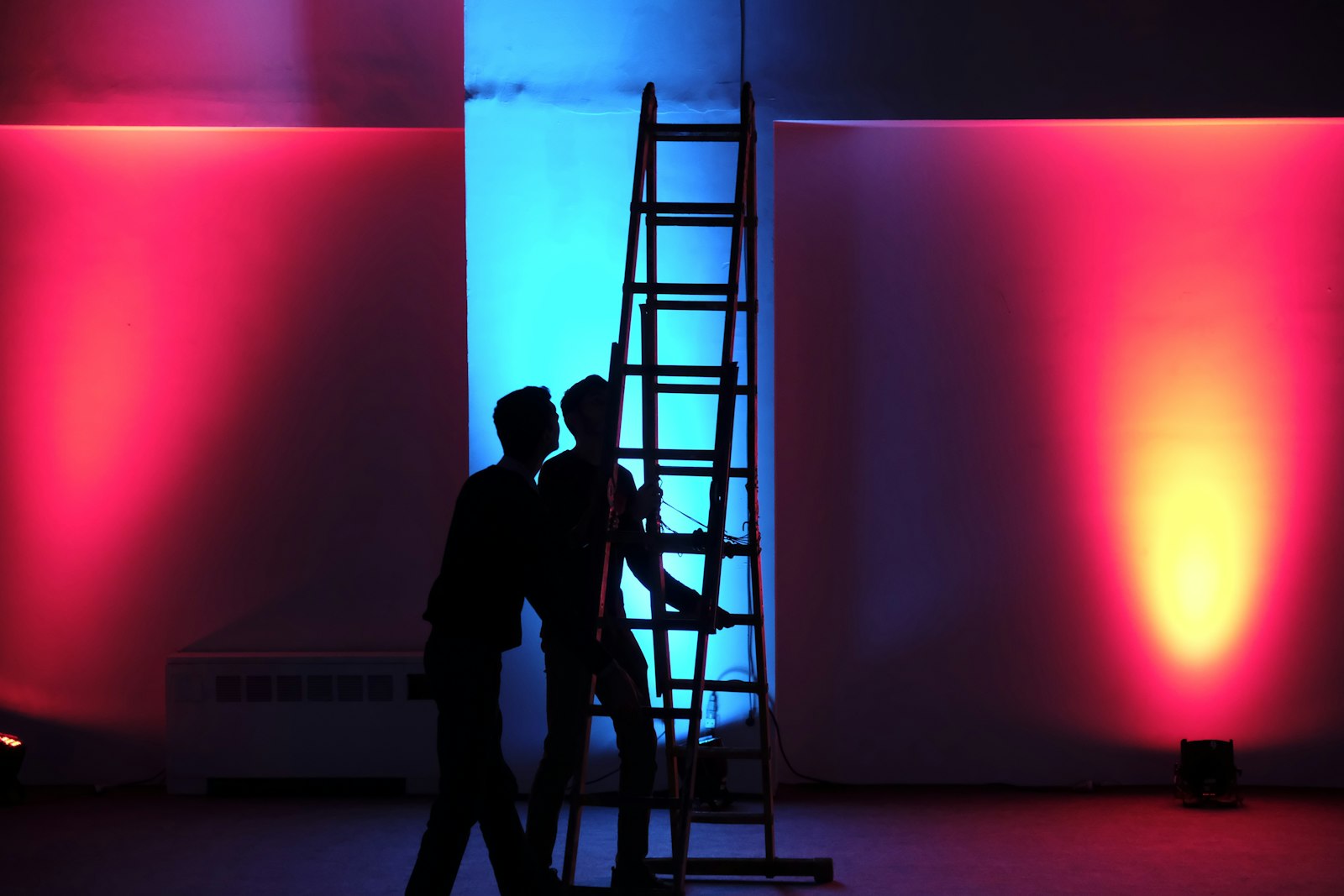
Uplighting transforms the walls and architectural features of a venue from neutral background into a branded environment. Company colors deployed across the perimeter of a ballroom create a cohesive visual identity that reinforces brand presence without requiring printed décor. Uplighting is one of the highest-impact, lowest-footprint production elements available for any corporate event.
Dynamic lighting transitions signal program changes to the audience without an announcement. Lights shifting from warm dinner tones to high-contrast presentation lighting cue guests that the program is moving to the next segment. That cueing helps the event flow feel intentional rather than abrupt.
Moving lights and monograms project patterns, graphics, or branded imagery onto walls, floors, and ceilings, turning the venue itself into part of the visual experience. For holiday parties and brand-forward corporate events, these elements create the kind of environmental detail that guests photograph and remember.
Why Professional Audio Is Non-Negotiable
At any corporate event, audio is the element that most directly determines whether guests feel engaged or disconnected from what is happening on stage. A beautifully designed room with poor sound is an event where guests stop paying attention and start talking to each other. A well-designed audio system makes every speech, every award announcement, and every entertainment moment feel present and clear to every person in the room.
A properly designed corporate event audio system includes:
Main speakers positioned and angled to deliver even coverage across the full audience area, not just the front section. In larger rooms, delay speakers placed further into the space ensure that guests in the back rows hear the same audio level as those near the stage.
Wireless microphones appropriate to the format. Handheld microphones work well for awards presentations and audience interaction moments. Lavalier microphones allow speakers to gesture and move freely without holding equipment. Headset microphones serve performers and high-movement presenters. The right microphone choice depends on the run of the show, and the production team should know that plan before the gear is loaded in.
A professional mixing console managed by an audio engineer throughout the event. Live mixing is not a set-and-forget operation. Levels vary between speakers. Feedback risks emerge in different room configurations. Music transitions require real-time management. A dedicated audio engineer is what separates a system that sounds professional throughout the evening from one that has moments of disruption the audience notices.
Using Video Screens and Visual Content Effectively
In any corporate event held in a larger venue, video screens extend the stage experience to every seat in the room. Guests seated far from the stage can see presenter faces, read slide content, and follow award presentations clearly when screens are properly positioned and sized for the space.
Video displays serve multiple functions throughout a corporate event program:
Presentation content: Slides, company videos, and graphic packages that support executive remarks and award segments.
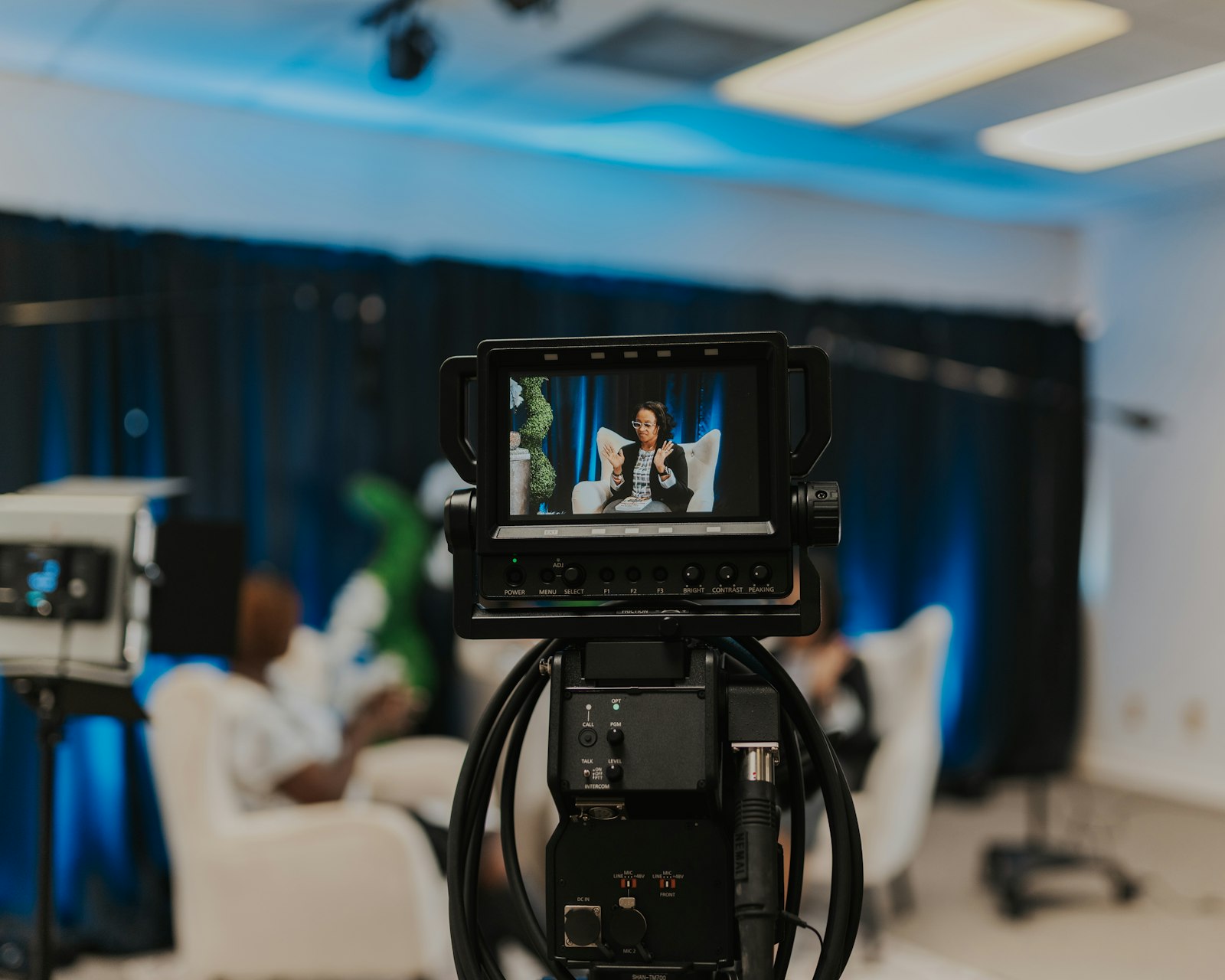
Live camera feeds (IMAG): Image magnification that broadcasts real-time camera footage of the stage to screen, making presenters and performers feel present to the full audience regardless of seating position.
Award and recognition graphics: Name displays, department identifiers, and recognition slides that support award presentations and make honorees feel celebrated at full-room scale.
Ambient and branded content: Branded loops, sponsor recognition, and event-specific graphics displayed during transitions, dinner service, and pre-show periods that reinforce visual identity throughout the evening.
Screen size and placement should be determined by the audience's viewing distance and the room's architecture, not by what is available in the production company's standard package. A screen that is too small for the room is not a screen. It is a distraction.
Selecting Entertainment That Fits the Culture
Entertainment choices for a corporate event should reflect the culture and preferences of the specific audience, not a default to whatever seems most impressive or most generic. A comedy performance that lands perfectly for one company culture will fall flat, or worse, create discomfort, for another.
Common entertainment formats and when they work best:
DJs and live bands are versatile anchors for the end of the evening, shifting the energy of the room from formal programming to celebration. Live bands create a more organic atmosphere. DJs offer more genre flexibility and can read the room more dynamically.
Keynote speakers and comedians work best when their material is genuinely relevant to the audience's professional context or company culture. Generic keynote content is more damaging to the event's energy than no entertainment at all.
Interactive performers and experiential elements are increasingly popular for holiday parties where the goal is engagement rather than passive viewing. Photo experiences, interactive installations, and audience-participation segments give guests something to do rather than just something to watch.
Company award presentations are often the emotional peak of corporate celebration events. When produced with proper staging, video support, and audio clarity, they become the moment guests talk about afterward. When they are technically rough, they feel awkward at a moment that should feel significant.
Entertainment timing matters as much as entertainment selection. Programming that follows dinner service can shift the energy of the room in a way that programming placed before dinner cannot. Coordinating entertainment placement with the run of the show, rather than booking entertainment first and building the program around it, consistently produces better event flow.
Catering and Guest Experience Timing
Food and beverage service has a larger impact on how guests experience a corporate event than most production-focused planners initially account for. Menu quality matters, but the timing and efficiency of service often matters more.
Long waits for food service shift guest attention from the program to their own discomfort. Bar placement that creates bottlenecks disrupts guest flow and generates frustration during arrival and break periods. Dinner service that overlaps with speeches or award presentations forces guests to choose between eating and paying attention, and most choose eating.
Coordination between the catering team and the production team on the run of show timeline is what prevents those conflicts. The production team should know when dinner service begins and ends. The catering team should know when speeches and presentations are scheduled. A shared timeline and a single point of contact between both operations keeps the evening running without the kind of timing conflicts that guests notice immediately even if they cannot identify exactly what went wrong.
Building the Run of Show
The run of show is the operational document that makes a corporate event actually function as a unified experience rather than a sequence of separate moments.
A complete run of show includes every element of the program with precise timing: guest arrival and registration, walk-in music and ambient content, cocktail hour transitions, dinner seating, welcome remarks, speeches and presentations with exact start and end times, video playback cues, award segments with honoree names in order, entertainment timing, and final program close.
This document is not for the event organizer alone. It is the shared reference for every production operator, every vendor, and every presenter. The lighting operator needs to know when to shift from dinner ambiance to presentation lighting. The audio engineer needs to know when to open microphones. The show caller needs to know when to cue each transition.
A dedicated show caller or event producer who manages live cues throughout the evening keeps the program running on schedule even when individual elements run slightly long or short. That real-time management is what prevents the cascade effect where one delayed segment throws every subsequent element off by an accumulating margin.
Production Insights: Power and Lighting Are Always the Surprises
Two elements consistently catch corporate event planners off guard, and both are addressed best before the venue contract is signed.
Power capacity becomes critical the moment the production scope includes large lighting systems, video walls, or substantial audio infrastructure. Most full-scale corporate event productions require multiple dedicated 20-amp circuits at minimum, and some require significantly more depending on the brightness and scale of the lighting and video systems. Venues that appear to have adequate power during a site visit may not have sufficient dedicated circuit capacity once the full technical rider is evaluated. This assessment should happen during venue evaluation, not during load-in.
Lighting dependency on house systems is the second consistent surprise. Most venues rely on house lighting designed for general visibility, not for events. When those lights are dimmed for presentations or entertainment, the room can go flat or completely dark in ways that undermine the atmosphere entirely. Uplighting fills that gap by creating ambient color and warmth that makes the room feel designed rather than emptied. Stage spotlights ensure that anyone presenting is clearly visible and professionally framed. Moving lights and monograms turn the venue itself into part of the event's visual identity.
The corporate events that feel most polished are almost always the ones where the lighting design received the same planning attention as the program content itself.
Managing Vendors and Event Budget
A large corporate event typically involves multiple vendors operating in the same space on the same timeline. Production teams, caterers, entertainment providers, décor companies, venue staff, and any additional service providers all need to coordinate without the guest-facing experience revealing any of that coordination.
Clear communication between vendors, a shared run of show, and defined points of contact for each vendor relationship are the operational standards that prevent scheduling conflicts, logistical collisions, and the kind of last-minute improvisation that guests detect as disorganization.
Budget planning for corporate events should reflect actual priorities. Staging, lighting, and audio investments consistently produce the most visible impact on how professional the event feels. Venues that look impressive in photographs but lack adequate power infrastructure, ceiling height, or load-in access create production problems that no budget can fully compensate for after the contract is signed. The investment in a full-service production partner who evaluates these factors early is almost always more cost-effective than the alternative.
Corporate Event Production Services
The table below outlines what Portland Production Services delivers for corporate events and holiday parties, and what each service is designed to accomplish.
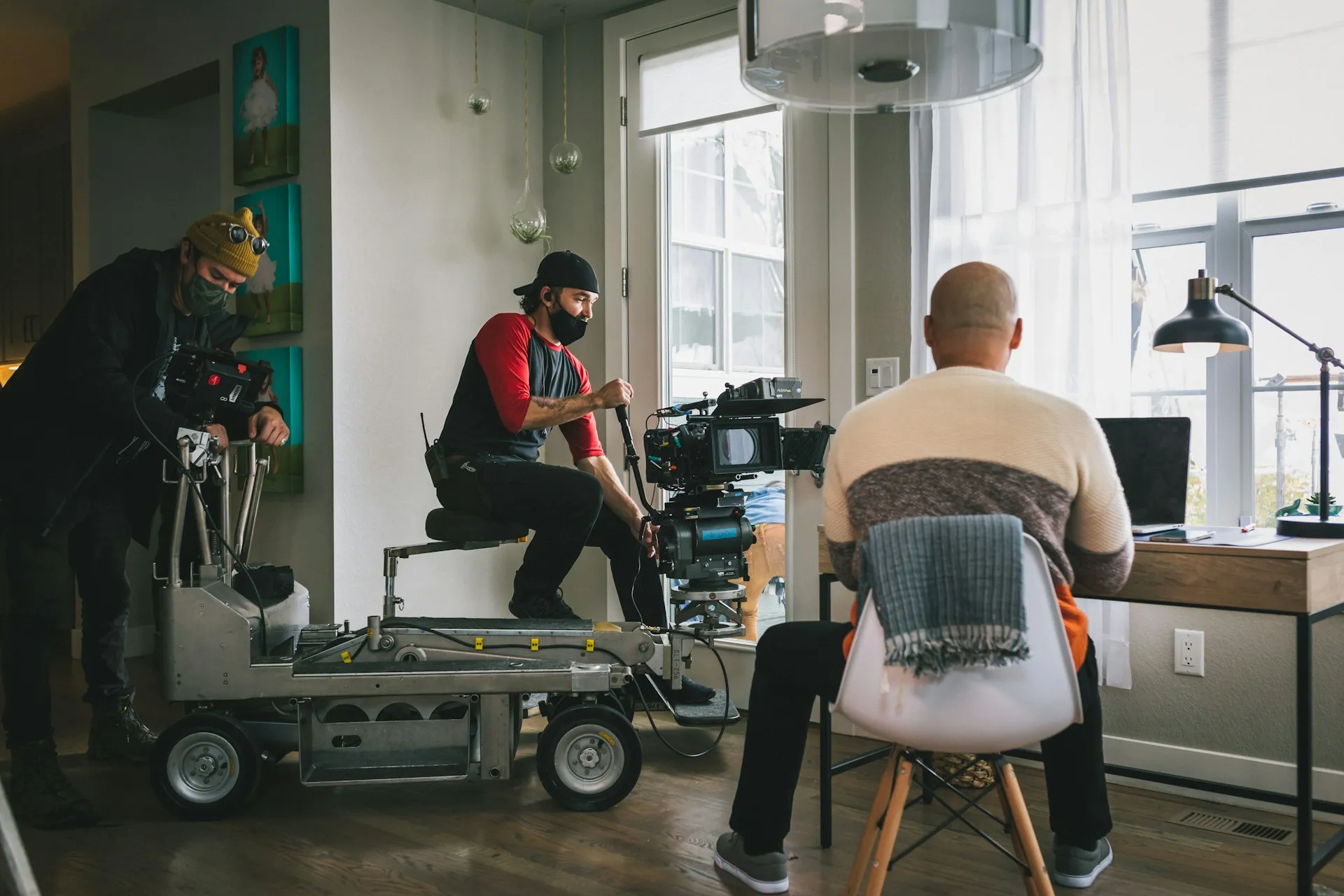
Event Production and Live Streaming- Full-scale AV production with staging, lighting, audio, video walls, and live streaming
Commercial Video Production- Company videos, award packages, and branded content for display during the event
Corporate and Training Videos- Internal communications, executive messages, and onboarding content
Marketing and Promotional Videos- Event recap and highlight reel production for post-event marketing and social content
Nonprofit Storytelling- Impact and mission videos for nonprofit galas, fundraising events, and donor gatherings
Every Detail Supports the Experience
A large corporate event is not the sum of its individual vendors. It is the product of how well those vendors were coordinated toward a single, clearly defined experience. When staging, lighting, audio, entertainment, catering timing, and the run of show are planned together with a shared purpose, the event feels effortless to every guest in the room, regardless of the complexity behind it.
The most successful corporate events are not always the ones with the largest budgets. They are the ones where every detail was chosen with intention and executed with precision. Portland Production Services brings twenty-plus years of corporate event production experience to every engagement, from the first venue walkthrough through the final post-event strike.
Ready to Plan a Corporate Event That Guests Actually Remember?
Your company deserves an event that reflects the quality of the work your team does every day. Portland Production Services handles the staging, lighting, audio, video walls, and live production so your leadership team can focus on the people in the room rather than the systems keeping the event running. Tell us about your event and we will show you exactly how to build an experience that lands.
Frequently Ask Questions
1: How far in advance should a large corporate event be planned?
Most large corporate events and holiday parties require three to six months of planning to properly secure a venue, book production vendors, coordinate entertainment, and build a complete run of show. Events requiring complex staging, video walls, or large lighting systems benefit from starting the production conversation as early as possible, since equipment availability and crew scheduling both constrain last-minute planning significantly.
2: What production elements have the greatest impact on a corporate event?
Staging, lighting, and audio systems consistently produce the most visible impact on how professional a corporate event feels to guests. Lighting sets the atmosphere and guides the energy of the room. Audio determines whether guests feel engaged with the program or disconnected from it. Staging determines whether presentations, awards, and entertainment feel polished or improvised. These three elements, coordinated by a professional production team, are what separate events that feel premium from ones that feel like they were assembled at the last minute.
3: What is a run of show and why does it matter?
A run of show is the precise timing document that outlines every moment of a corporate event program, including arrival, speeches, video playback, award segments, entertainment transitions, and close. It is the shared operational reference for every vendor, every production operator, and every presenter involved in the event. A well-built run of show prevents the cascade of delays that happens when one segment runs long and throws every subsequent element off schedule. A dedicated show caller manages live cues against this document throughout the evening
.4: Why is power planning so important for corporate events?
Large corporate event productions with professional lighting systems, video walls, and substantial audio infrastructure require significant dedicated electrical capacity. Most productions of this scale require multiple dedicated 20-amp circuits at minimum. Venues that appear to have adequate power may not have sufficient dedicated circuit capacity once the full technical requirements are evaluated. This assessment should happen during venue selection, not during load-in, when there is no longer an opportunity to address the problem without compromising the production scope.
5: Should a corporate event include professional entertainment?
Entertainment enhances engagement and helps transition the event from formal programming to celebration when it is chosen to match the specific culture and preferences of the audience. Generic entertainment choices that do not reflect the organization's culture can fall flat or create discomfort. The most effective entertainment selections for corporate events are ones where the format, content, and timing are all aligned with the company's specific audience and the event's defined purpose.
6: How does Portland Production Services support corporate event production?
Portland Production Services provides full-scale event production support including staging design, professional lighting systems, broadcast-quality audio, video walls, live camera feeds, live streaming, and run of show coordination. The team works from the initial venue walkthrough through event day execution and post-event strike, ensuring every production element is planned, tested, and delivered without the guest-facing experience revealing any of the complexity behind it.
Key Takeaways
- Every successful corporate event starts with a clearly defined purpose that aligns all subsequent production, layout, and programming decisions.
- Venue selection should evaluate ceiling height, load-in access, power capacity, and guest flow alongside guest capacity. Technical constraints identified after the contract is signed are expensive to solve.
- Lighting, audio, and staging are the three production elements that most directly determine how professional a corporate event feels to every guest in the room.
- A detailed run of show shared across all vendors and managed by a dedicated show caller is what keeps the event's energy and timing intact from arrival through close.
- Portland Production Services brings twenty-plus years of corporate event production experience, fully owned equipment, and a coordination-first approach to every large-scale corporate gathering and holiday party.
There's more ...


Unleash Your Inner Creative Madness With Us!
info@portlandproductionservices.com
503-317-6447
© Portland Production Services 2026
8816 SE 29TH AVE
MILWAUKIE OR 97222-6323, US

