



How Much Does It Cost to Produce a Video? Full Breakdown
Video production costs vary based on scope, but understanding key factors like crew size, shoot days, locations, talent, and post-production helps businesses budget confidently and maximize the return on their investment.
It is the first question almost everyone asks and the one most production companies are strangely reluctant to answer: how much does it cost to produce a video? The honest answer is that it depends, but that is not good enough on its own, because the things it depends on are knowable, and once you understand them you can predict your own costs with real confidence.
This is the full breakdown. Real ranges, the factors that move the number, and how to get the most for whatever you have to spend. By the end you will know roughly where your project lands and why, so that when you scope professional video production for your business, you walk in informed instead of guessing. Let us open the books.
Why There Is No Single Price for Video
Video production has no fixed price for the same reason building a house has no fixed price. A studio apartment and a custom estate are both houses, but nobody expects them to cost the same.
A video can be one person filming a testimonial in an afternoon, or a full crew producing a multi-location commercial over several days with heavy post-production. The range between the simplest and the most complex video is enormous, which is why any honest answer starts with ranges, not a single figure. What matters is learning where your specific project falls on that spectrum, and the breakdown below shows you exactly how to place it.
The General Cost Ranges for Video Production
Here are the broad tiers you will find across the video production market. These are general industry ranges to orient you, not a quote, since every project is scoped to its own specifics. But they give you a realistic frame.
Basic Tier
At the entry level, you will find simple videos produced by a single videographer with minimal crew, basic editing, and one location. Across the market this work generally runs from around one thousand to five thousand dollars. It suits straightforward content like simple talking-head videos, basic social content, or a single uncomplicated testimonial.
Professional Tier
The middle and most common tier for serious business video involves a small professional crew, a half or full shoot day, professional lighting and audio, and polished editing. Market rates here typically run from roughly five thousand to twenty thousand dollars depending on complexity. This is where most quality brand videos, commercials, and marketing pieces live.
Premium Tier
High-end productions with a full crew, multiple shoot days, multiple locations, professional talent, and advanced post-production like motion graphics and detailed color work generally start around twenty thousand dollars and climb from there based on scope. This tier covers flagship brand films and complex commercial campaigns.
Broadcast and Beyond
Nationally aired commercials and large-scale productions can run well into six figures once you factor in extensive crews, name talent, and broadcast-grade everything. Most local and regional businesses never need this tier, but it explains why headline video budgets sometimes sound astronomical.
The takeaway is not to memorize the numbers. It is to recognize that your project's tier is determined by the choices in the next section.
The Line-Item Breakdown: Where the Money Goes
Whatever the total, a video budget is built from the same set of components. Understanding them shows you exactly what you are paying for and where you have room to adjust.
Pre-production covers concept development, scripting, and planning. It is often underestimated, but it is where the project is designed and where problems get prevented.
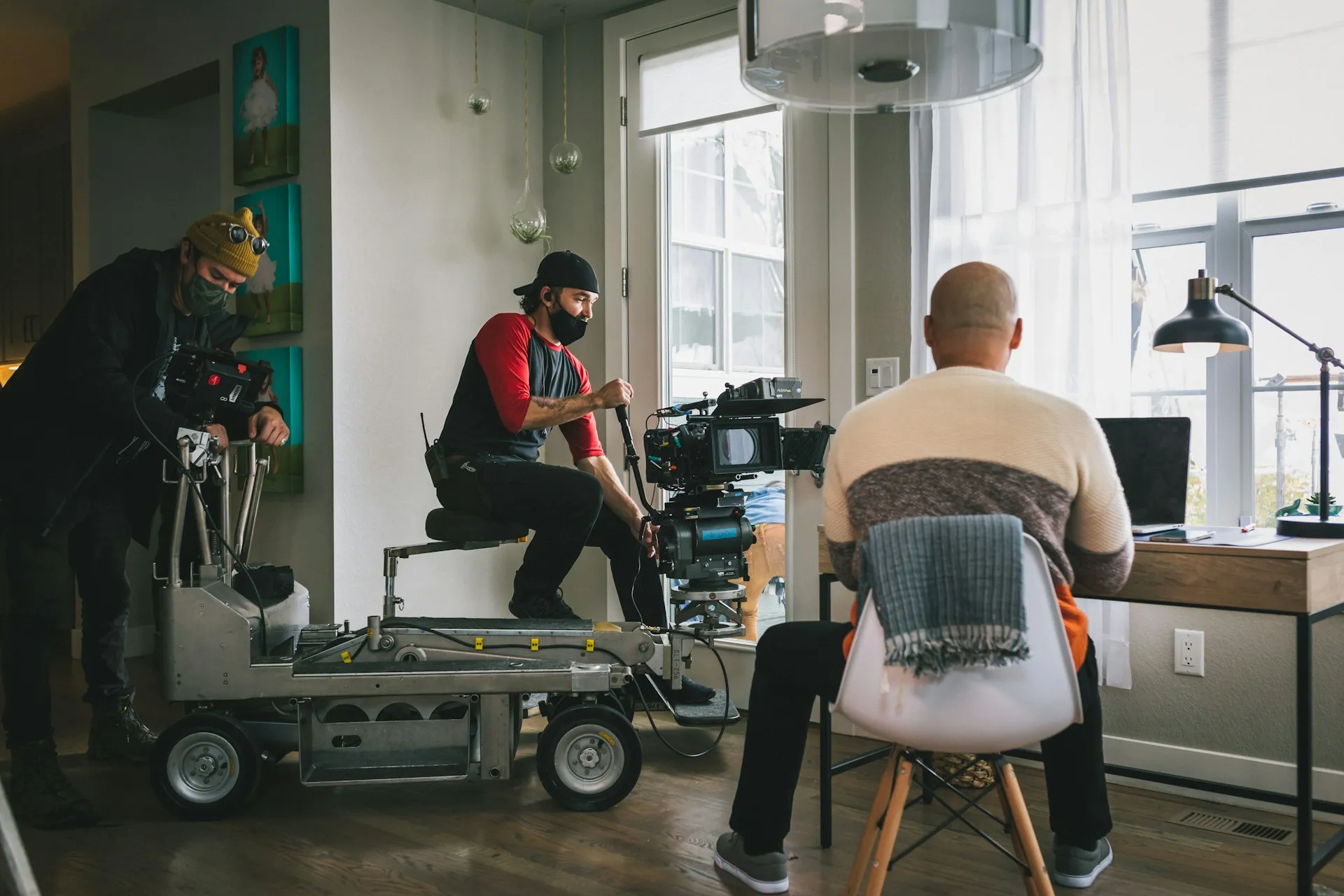
Crew is frequently the largest line item. A solo shooter is one rate; a director, camera operator, lighting tech, and audio engineer is several. Crew size scales with the complexity of what you are shooting.
Equipment ranges from a basic camera-and-light setup to cinema cameras, lighting packages, audio rigs, and specialty gear like drones or stabilizers. Companies that own their equipment avoid passing rental markups to you.
Talent includes on-camera actors, voiceover artists, and casting. Using real team members or customers costs less and often feels more authentic.
Locations can be free if you use your own space, or add cost through rentals, permits, and travel.
Post-production covers editing, color grading, sound mixing, music licensing, and motion graphics. Complex posts can rival production in cost.
Deliverables matter more than people expect. One finished master is one price; a master plus vertical, square, and short-form cuts adds editing time, though producing them together is far cheaper than separate shoots.
What Pushes a Video From Affordable to Premium
The same idea can be produced cheaply or expensively. These are the variables that decide which.
Complexity of the concept. A straightforward interview costs far less than a scripted narrative with actors, sets, and multiple scenes.
Number of shoot days. Each additional day multiplies crew, equipment, and location costs. Tight planning that captures everything in one day is one of the biggest cost savers available.
Crew and talent level. More specialists and professional on-camera talent raise quality and cost together.
Post-production demands. Heavy animation, detailed color grading, and complex sound design extend the edit significantly.
Deliverable count. Every additional format and cut adds editing time.
The useful insight here is that you control most of these levers. A clear-eyed conversation about which ones actually matter for your goal lets you build a video that hits the mark without paying for complexity you do not need. The Oswego Hills Vineyard and Winery work shows how thoughtful production choices produce premium-feeling results without unnecessary excess.
How to Get the Most Value From Your Video Budget
Spending well matters more than spending little. Here is how to maximize return on whatever you invest.
Split your budget between production and distribution. A common mistake is spending everything on the video and having nothing left to run it. The video only works if people see it.
Batch to lower your cost per video. A single planned shoot day can capture footage for several videos, spreading the fixed costs of crew and setup across multiple finished pieces. This is the single most effective way to bring down cost per video, and it works especially well for budget-conscious organizations like non-profits that need to stretch every dollar.
Spend where it shows. Audio quality, lighting, and editing affect perceived quality more than exotic camera gear. Invest in what the viewer actually notices.
Match the tier to the stakes. A casual social clip does not need premium production, and a brand-defining commercial should not be done on the cheap. Put your money where the video matters most.
The Hidden Cost of Going Too Cheap
The cheapest video is not always the most affordable one. Underspending carries costs that never appear on the invoice.
A video produced too cheaply can quietly damage credibility, especially in industries where buyers read quality as a signal of trustworthiness. A manufacturing firm presenting capability to procurement buyers cannot afford footage that looks amateur, because the production quality itself is part of the message. There is also the reshoot cost when bargain footage turns out unusable, and the hardest cost to measure: the customers' weak video turned away without you ever knowing. The right question is not how to spend the least, but how to get the best return on what the video needs to accomplish.
Cost Advantages of a Local Production Partner
Where your production company is based affects your bottom line directly. A local partner removes costs an out-of-market team adds.
Portland Production Services has produced video for Pacific Northwest businesses for more than 20 years, with fully owned equipment and an in-house crew. Owned gear means no rental markups on your invoice, and a local crew across Portland, Beaverton, Hillsboro, Lake Oswego, Tigard, and Vancouver, WA means no travel days inflating the cost. The team's knowledge of regional locations and weather also shortens planning and prevents the expensive surprises that come from working in unfamiliar territory.
Because every project is scoped to its own specifics, the only way to get an accurate number is a conversation about your goals. PPS scopes each project individually rather than working from a fixed rate card, which means you pay for what your video actually needs.
Now You Can Budget With Confidence
So, how much does it cost to produce a video? Somewhere between a thousand dollars and a small fortune, and exactly where depends on the choices you now understand: the tier, the line items, and the variables that move the number. The price is not a mystery. It is a set of decisions.
Knowing the breakdown means you can plan a video that fits your budget and your goal, and recognize a fair quote when you see one. That is worth more than any single number.
Let's Build a Quote Around Your Actual Goals
Portland Production Services brings 20+ years of experience, fully owned gear, and a local Pacific Northwest crew to projects at every tier, scoped to what your video actually needs.
Request a project consultation from Portland Production Services and bring your goal and your budget range. We will scope a video that fits both and explain exactly where every dollar goes.
Already produced a video with PPS? Leave a quick review about your experience and help the next Portland business budget with confidence.
Frequently Asked Questions
1.How much does it cost to produce a video?
Video production costs vary widely by complexity, generally ranging from around one thousand dollars for a simple single-person shoot to twenty thousand or more for a professional crewed production, with high-end and broadcast work climbing further. The final price depends on crew size, shoot days, locations, talent, and post-production. The most accurate way to get a number is to define your goal first, then scope a project to match.
2.What factors affect video production cost the most?
The biggest cost drivers are crew size, the number of shoot days, talent, post-production complexity, and how many deliverable formats you need. Crew and shoot days typically have the largest impact, which is why tight planning that captures everything efficiently saves the most money. Concept complexity sits underneath all of these, since an ambitious idea raises every other line item.
3.Why do video production quotes vary so much?
Quotes vary because video production has no standard scope, so two companies may be pricing very different levels of work. One quote might cover a single shooter and basic editing while another includes a full crew, multiple deliverables, and advanced post-production. Always compare what each quote actually includes rather than just the bottom-line number.
4.How can I reduce video production costs without hurting quality?
The most effective savings come from batching multiple videos into one shoot day, using real team members instead of paid talent, keeping to a single location, and planning thoroughly so the shoot runs efficiently. Spend your budget where viewers notice it most, on audio, lighting, and editing, rather than on exotic equipment. Cutting corners on those fundamentals tends to cost more in the end.
Key Takeaways
- There is no single price for video. Costs generally range from about one thousand dollars for basic work to twenty thousand or more for professional crewed productions, with the tier set by your specific choices.
- A video budget is built from clear line items: pre-production, crew, equipment, talent, locations, post-production, and deliverables, and crew and shoot days usually move the most.
- Spending well beats spending little. Split budget between production and distribution, batch to lower cost per video, and invest where viewers actually notice, which is audio, light, and editing.
- Going too cheap carries hidden costs in credibility, reshoots, and lost customers. PPS scopes every project individually with 20+ years of Pacific Northwest experience, owned gear, and a local crew.
There's more ...


Unleash Your Inner Creative Madness With Us!
info@portlandproductionservices.com
503-317-6447
© Portland Production Services 2026
8816 SE 29TH AVE
MILWAUKIE OR 97222-6323, US

