



Marketing Video Production Services: Hire a Pro or DIY?
Here’s a short excerpt version: Marketing video production services aren’t always necessary. Some videos are better shot in-house for speed and authenticity, while others require professional production to protect brand credibility and drive conversions. The key is knowing when DIY is enough—and when the stakes demand a pro.
Here is something most production companies will not tell you: sometimes you should just shoot it yourself. Not every marketing video justifies a professional crew, and a partner worth trusting will say so. But the inverse is just as true. Some videos are too important to risk on a phone and a prayer, and getting that call wrong is expensive in both directions.
This is an honest framework for deciding when to use marketing video production services and when DIY is genuinely the smarter move. No hard sell. By the end you will know which bucket each of your videos falls into, and when the moment comes that the stakes are real, marketing video production services built for high-stakes work will be the obvious call rather than a gamble. Let us make the decision clear.
When DIY Marketing Video Actually Makes Sense
DIY video has a real place in a modern marketing program. Pretending otherwise wastes your money. Here is where doing it yourself is the right choice.
Low-Stakes, High-Volume Social Content
Casual social posts, quick behind-the-scenes clips, and timely reactions to trends do not need production polish. They need to be fast, frequent, and authentic. Audiences expect this content to feel raw, and over-producing it can actually hurt. A phone and decent natural light are often all you need.
Internal Updates and Quick Communications
A team update, a quick announcement, or an informal message to your audience is about the message, not the cinematography. Spending a professional production budget here is overkill.
Testing a Concept Before Investing
Before committing to a professionally produced campaign, a rough DIY version can test whether the message and format resonate. If a scrappy test gets traction, that is your signal to invest in a polished version worth scaling.
The Honest DIY Limits
DIY works until the moment quality becomes part of the message. The trap is not that DIY looks bad. It is that DIY looks fine right up to the point where it quietly costs you credibility, and you never get the feedback telling you it happened. Knowing where that line sits is the entire skill.
When You Genuinely Need Marketing Video Production Services
Some videos carry too much weight to risk. These are the projects where professional production is not a luxury, it is risk management.
Brand-Defining Videos
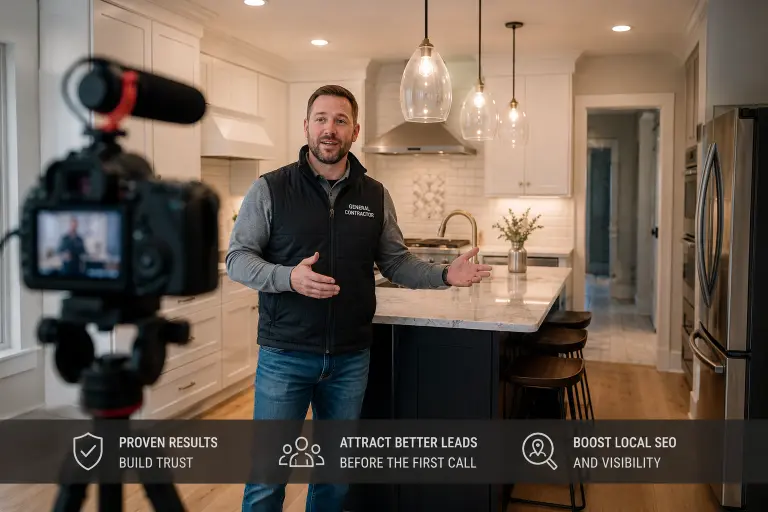
Your primary brand video, the one on your homepage that shapes first impressions at scale, is not the place to save money. This asset represents your company to every prospect who lands on it, and amateur production here undermines everything else your marketing works to build. When a video is the first thing a prospect sees, its quality becomes a direct statement about your company's quality.
Conversion-Critical Content
Videos with a direct revenue job, landing page commercials, paid ad creative, and sales enablement assets, need to perform. The difference between a converting video and a nice-looking one is craft: the hook, the pacing, the audio, the edit. These are professional skills, and on revenue-driving content they pay for themselves.
High-Trust Industries
In sectors where buyers read production quality as a proxy for company quality, professional video is non-negotiable. A real estate brand marketing premium listings or a healthcare provider building patient trust cannot afford video that signals corner-cutting. The production quality is part of the value proposition.
Mission-Critical Storytelling
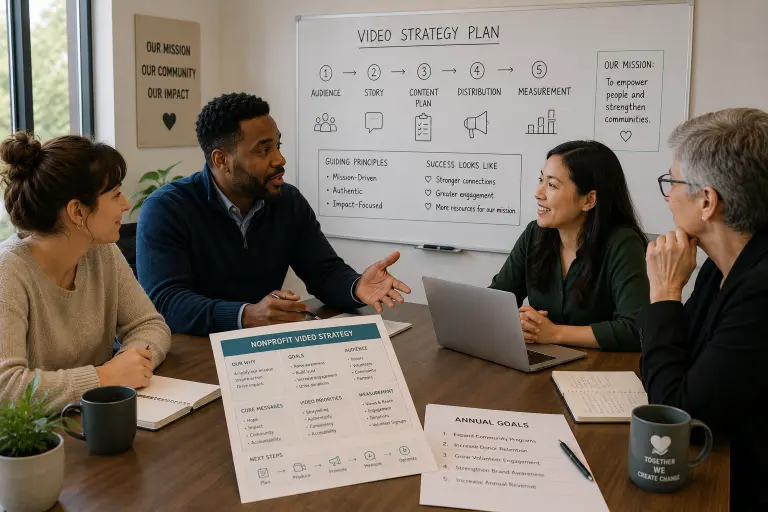
When the entire point of a video is emotional resonance, the craft is the message. Non-profit video production that needs to move donors to give, or a customer story that needs to move prospects to buy, depends on professional storytelling, pacing, and sound that DIY cannot reliably deliver. The Oswego Hills Vineyard and Winery work shows what professional storytelling does for a brand whose identity is the selling point.
Anything Bound for Broadcast
Television and connected TV enforce technical delivery standards that DIY cannot meet. If a video is heading anywhere near broadcast, professional production is the only path that survives the spec.
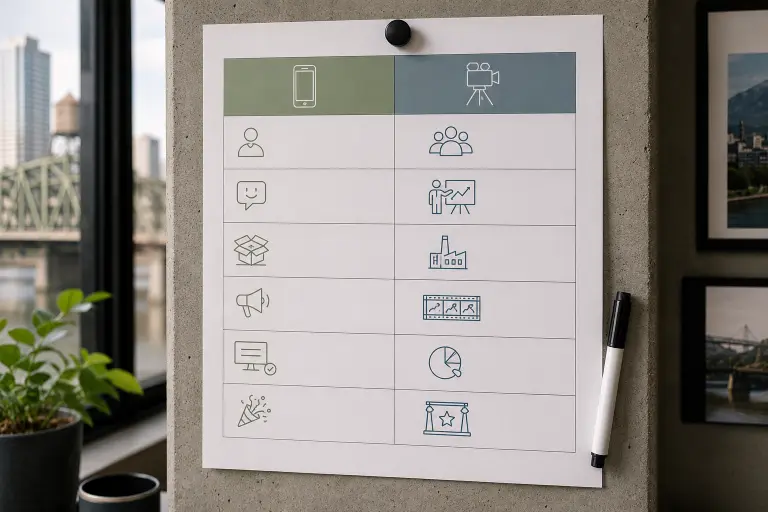
The Hybrid Model Most Smart Brands Actually Use
The real answer for most businesses is not pro or DIY. It is both, deployed deliberately.
The smartest marketing programs use professional production for the anchor assets, the brand video, the conversion content, the proof stories, then handle high-volume social and casual content in-house. The professional shoots set the quality bar and supply a library of polished cuts and b-roll, while the DIY content fills the gaps between campaigns with frequency and authenticity.
This hybrid approach also stretches a professional production further. A single professional shoot can supply the b-roll, brand footage, and visual reference that makes your in-house DIY content look dramatically better. Your team's phone videos sit inside a brand world that a pro established, so even the casual content benefits from the investment.
For brands running events, the hybrid logic extends naturally. Professional live streaming production captures the high-stakes live moment while your team grabs casual behind-the-scenes content around it, and both feed the same marketing pipeline.
The Real Cost Comparison Nobody Runs Honestly
The DIY case is usually argued on cost: free is cheaper than paid. But the honest comparison includes the costs DIY hides.
DIY video carries a time cost that rarely gets counted. The hours your team spends filming, re-filming, and learning to edit are hours not spent on the work they were hired for, and that salary time is real money. There is also the reshoot cost when DIY footage turns out unusable, and the hardest cost to measure: the prospects a low-quality video quietly turned away.
Professional services carry a clear upfront cost, but that cost buys predictability, a usable result the first time, and assets that perform. The right question is not which is cheaper per video. It is which delivers a better return on the specific job that video needs to do. For low-stakes content, DIY wins that math easily. For high-stakes content, professional services win it just as clearly.
A manufacturing brand deciding between an in-house product clip and a professionally produced capability video is really deciding how much that particular video matters to the sale. The honest answer to that question makes the choice for you.
How to Decide, Every Time
Run any video through three questions and the answer becomes clear.
What is at stake? If this video represents your brand at a decisive moment or carries a revenue job, lean professional. If it is casual, internal, or experimental, DIY is fine.
Who will see it, and in what context? A homepage hero seen by every prospect demands more than a quick clip seen by existing followers between posts.
What does failure cost? If a weak version quietly damages credibility or loses conversions, the professional investment is cheap insurance. If the worst case is a forgettable social post, save your budget.
Answer honestly and you will rarely get the call wrong in either direction.
Know When to Call in the Pros
DIY and professional marketing video are not rivals. They are tools for different jobs. The brands that get video right use each where it belongs: DIY for volume and authenticity, professional services for the assets that carry real weight. The mistake is using one tool for every job.
When the stakes are real, the choice is not close. The only question worth asking is whether this particular video is one your business can afford to get wrong.
When the Stakes Are Real, Let's Talk
Portland Production Services brings 20+ years of marketing video experience, fully owned gear, and a local Pacific Northwest crew to the projects that matter most, the ones too important to risk.
Book a consultation with Portland Production Services and tell us what you are weighing. We will give you a straight answer on whether your project calls for a pro or whether DIY will serve you fine.
Already worked with PPS? Share your experience in a quick review and help the next Portland brand make the call with confidence.
Frequently Asked Questions
1.Should I hire marketing video production services or do it myself?
The answer depends on what is at stake. DIY is the smart choice for low-stakes, high-volume content like casual social posts and internal updates, while professional services are worth it for brand-defining videos, conversion-critical content, high-trust industries, and anything bound for broadcast. Most successful brands use a hybrid: professionals for anchor assets, DIY for frequent casual content.
2.When is a DIY marketing video good enough?
DIY works well for casual social clips, behind-the-scenes content, quick announcements, and testing a concept before investing in a polished version. These formats benefit from speed and authenticity rather than production polish, and audiences often expect them to feel raw. The limit is reached the moment video quality becomes part of how your brand is judged.
3.What videos are worth paying a professional for?
Pay for professionals on videos that carry real weight: your primary brand video, landing page and paid ad creative, customer testimonials, content for high-trust industries, and anything heading to broadcast. These videos either represent your brand at a decisive moment or carry a direct revenue job, where the craft of professional production pays for itself. Low-stakes content rarely clears that bar.
4.Can I combine DIY and professional video production?
Yes, and most smart marketing programs do exactly that. They invest in professional production for anchor assets like brand and conversion videos, then handle high-volume social and casual content in-house. A professional shoot also supplies b-roll and brand footage that makes your DIY content look noticeably better, so the two approaches reinforce each other.
Key Takeaways
- DIY marketing video is the right call for low-stakes, high-volume content like casual social posts, internal updates, and concept testing, where speed and authenticity beat polish.
- Professional marketing video production services are worth it for high-stakes work: brand-defining videos, conversion-critical content, high-trust industries, and anything bound for broadcast.
- The smartest brands run a hybrid model, using professionals for anchor assets and DIY for frequent content, with the professional shoot supplying b-roll that lifts the DIY work too.
- Decide with three questions every time: what is at stake, who will see it and where, and what failure costs. PPS brings 20+ years of Pacific Northwest experience to the videos too important to get wrong.

Unleash Your Inner Creative Madness With Us!
info@portlandproductionservices.com
503-317-6447
© Portland Production Services 2026
8816 SE 29TH AVE
MILWAUKIE OR 97222-6323, US

