


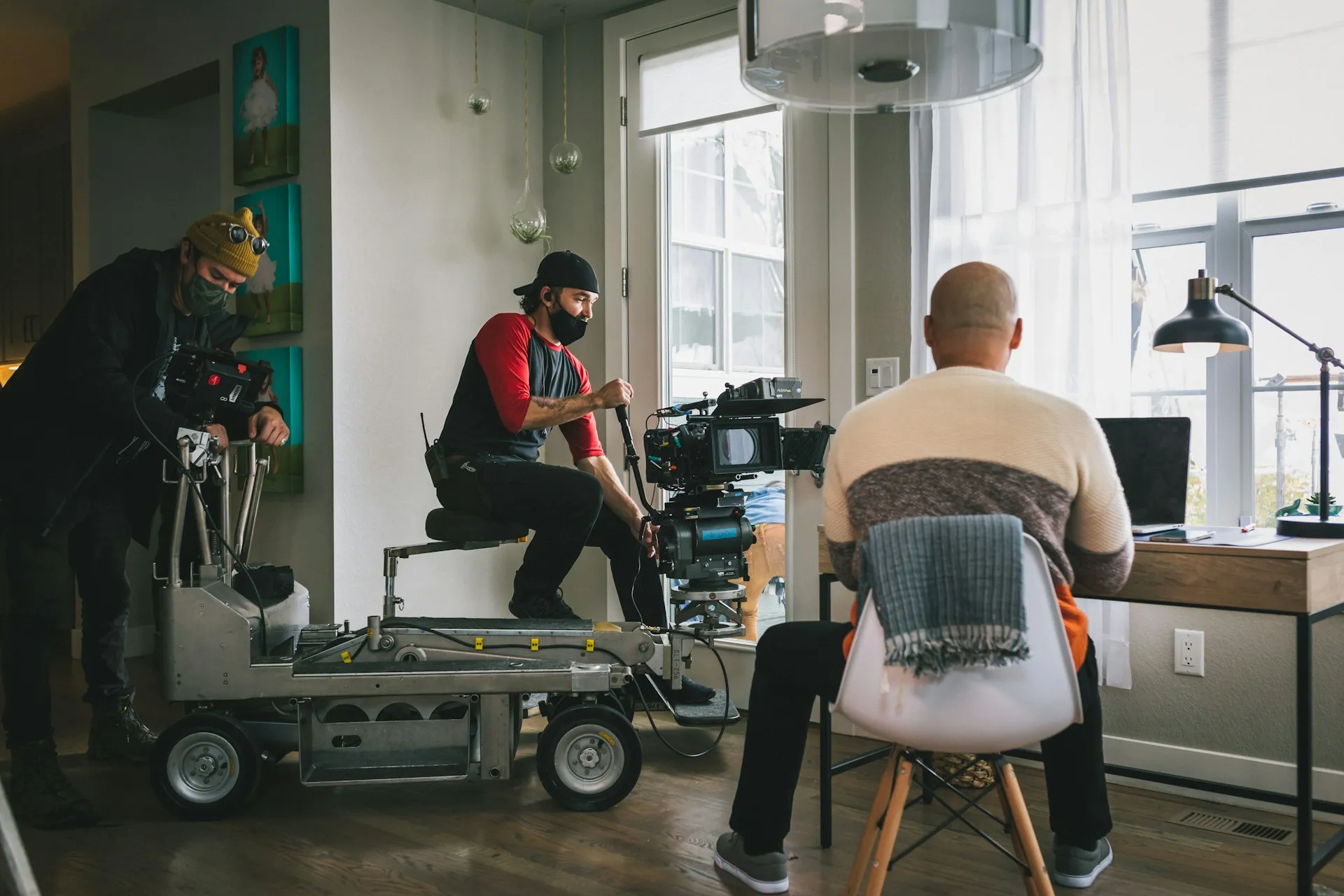



Video Marketing Production: A Complete Business Guide
Video marketing production works best as an ongoing system of brand, product, proof, and people content that compounds over time rather than relying on a single video to drive results.
Most businesses treat video like a fireworks show. They save up, produce one big expensive video, launch it, watch it fizzle, and conclude that video does not work for them. The problem was never the video. The problem was treating a system like an event.
Video marketing production done right is not a single deliverable. It is an ongoing program of coordinated content that compounds, where each asset supports the others and the whole library works harder than any individual video ever could. This complete guide shows you how to build that program, starting with video marketing production engineered as a connected system rather than a series of disconnected one-offs. By the end you will understand the content mix, the production model, the distribution plan, and the cadence that turns video into a durable marketing asset.
Why One Video Almost Always Disappoints
The single-video approach fails for reasons that have nothing to do with the quality of the video itself.
A lone video has no support structure. It launches into a feed, gets a brief spike of attention, and then has nowhere to go because nothing else in your marketing reinforces it. A video works best as part of a system that gives the audience multiple touchpoints, not a single moment that has to carry an entire campaign on its own.
Marketing has always run on frequency and consistency. One brilliant ad shown once does less than a good ad shown repeatedly across the places your audience already spends time. Video follows the same rule. The brands that win with video are not the ones with the single best video. They are the ones with a coordinated library doing continuous work.
The Four Pillars of a Video Marketing Production Program
A complete video marketing program rests on four content pillars. Most struggling brands have one or two. The ones who win build all four and keep them supplied.
Brand Pillar: Who You Are
Brand videos establish identity, values, and personality. These are the anchor assets that everything else hangs from, and they answer the question every prospect quietly asks: why should I care about you specifically. A strong brand video sets the tone the rest of your content lives inside.
Product Pillar: What You Do
Product and service videos show your offering in action. Demos, walkthroughs, and explainer content live here, doing the work of answering practical buyer questions before a sales conversation ever happens. This pillar converts curiosity into understanding.
Proof Pillar: Why You Are Trusted
Proof content is your customers making your case for you. Testimonials, case studies, and results-driven stories remove doubt at the exact moment buyers feel it. This is consistently the highest-converting pillar, because audiences trust other customers far more than they trust your marketing.
People Pillar: Why You Are Worth Knowing
People content humanizes the brand: team culture, behind-the-scenes, founder perspectives, and the human stories behind the work. This pillar builds the relationship that turns one-time buyers into repeat customers and advocates. For organizations where mission and humanity drive the decision, like non-profit video production, the people pillar often does the heaviest lifting of all.
The Production Model That Makes a Program Affordable
Here is the objection every business raises: producing four pillars of content sounds expensive. It is, if you produce it one video at a time. It is remarkably efficient if you produce it the right way.
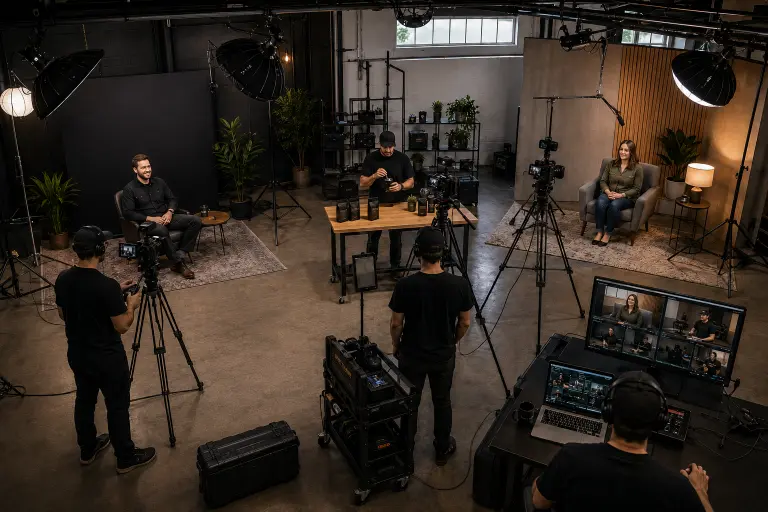
The secret is batch production. A single well-planned production day can capture material across multiple pillars at once: a brand statement, a product walkthrough, a customer testimonial, and behind-the-scenes footage, all from one crew, one setup window, and one invoice. Producing in batches rather than one-offs is what takes a video marketing program from a luxury to a line item most businesses can actually sustain.
Portland Production Services builds the batch plan during pre-production, mapping every asset the shoot will produce before the gear ships. One production day becomes weeks of scheduled content. The cost per finished video drops dramatically, and the brand maintains a consistent visual identity across everything because it all came from the same coordinated shoot.
This model also scales internally. Corporate and training videos produced alongside your marketing content keep the same look and feel across external campaigns and internal communications, so the brand experience stays seamless from a prospect's first ad to an employee's first onboarding session.
Distribution: Where Your Video Marketing Actually Earns Its Keep
Production gets the attention, but distribution determines the return. A video library that lives in a folder produces nothing. Here is how a complete program puts it to work.
Owned Channels
Your website, email, and sales materials are where video converts warm audiences. Embedded landing page video lifts conversion rates, video in email lifts click-through, and sales videos give your team something better than another attachment. Owned channels cost nothing to use and never stop working.
Earned and Social Channels
Organic social, YouTube, and shareable content build reach over time. The pillar model feeds these channels continuously: one batch shoot supplies weeks of social posts, each cut to native format for the platform it runs on. Consistency here compounds, because audiences reward brands that show up reliably.
Paid Channels
Paid social and video ads accelerate everything. The same library that fuels organic also supplies your paid creative, and because the assets already exist, testing new ad variations costs editing time rather than a new shoot. Live brand moments add another dimension here, where live streaming production turns events, launches, and announcements into real-time marketing that doubles as future content.
Building Your Video Marketing Calendar
A program needs a cadence, and a cadence needs a calendar. This is where strategy becomes operations.
Map content to your business calendar first. Product launches, seasonal peaks, events, and campaigns are fixed points your video should support. Build the calendar around them rather than producing content in a vacuum.
Plan shoots quarterly, publish continuously. A batch production day each quarter, paired with a steady publishing rhythm, keeps the pipeline full without constant filming. You shoot in concentrated bursts and release in a sustained stream.
Match each asset to a funnel stage. Awareness content at the top, consideration content in the middle, proof and conversion content at the bottom. A complete calendar covers the whole journey rather than overloading one stage.
Leave room for the timely. A program built entirely on planned content misses the moments that matter most. Reserve capacity for responsive video when an opportunity or event appears, which is far easier when you already have a crew relationship and a content system in place.
For industries with strong seasonal and project-driven cycles, like real estate, aligning the video calendar to listing seasons and market moments turns timing itself into a competitive advantage.
A Local Partner for an Ongoing Program
A one-off video can be produced by anyone. An ongoing video marketing program needs a partner who shows up reliably, knows your brand, and gets sharper with every shoot.
Portland Production Services has run ongoing video programs for Pacific Northwest brands for more than 20 years, with fully owned equipment and an in-house crew. For program work specifically, that continuity is the entire point: the same team that learns your brand on shoot one moves faster and smarter on shoot ten, locations across Portland, Beaverton, Hillsboro, Lake Oswego, Tigard, and Vancouver, WA are already scouted, and your visual identity stays consistent because the people protecting it never change.
Owned gear matters even more for programs than for single projects. A brand running quarterly shoots cannot afford rental availability dictating its content calendar. PPS controls its own equipment, which means your schedule drives the production, not a rental house's.
Stop Producing Videos, Start Building a Program
The shift from video as event to video as system is the single most important change a brand can make in how it approaches video. One video is a gamble. A coordinated program of brand, product, proof, and people content, produced efficiently in batches and distributed across owned, earned, and paid channels, is a marketing asset that compounds for years.
Video marketing production is not something you buy once. It is something you build, and the building is where the real return lives.
Let's Build Your Video Marketing Program
Portland Production Services brings 20+ years of program experience, fully owned gear, and a consistent in-house Pacific Northwest crew to brands ready to treat video as a system instead of a one-off.
Book a strategy consultation with Portland Production Services and bring your business goals and calendar. We will design the video marketing program that supports them.
Already built a program with PPS? Leave a quick review about your experience and help the next Portland brand invest in video with confidence.
Frequently Asked Questions
1.What is video marketing production?
Video marketing production is the ongoing process of creating a coordinated library of video content designed to support a brand's marketing across every channel and funnel stage. Rather than a single video, it is a connected program spanning brand, product, proof, and people content. The goal is a system where each asset reinforces the others and the whole library compounds over time.
2.How many videos does a video marketing program need?
Most effective programs run on a quarterly batch shoot that produces a cluster of assets across multiple content pillars, then publish those assets continuously over the following weeks. This typically yields a steady stream of marketing video without constant filming. The exact volume depends on how many channels you run and how fast your market moves.
3.How is video marketing production different from making a single ad?
A single ad is one asset with one job, while video marketing production builds an interconnected library where brand, product, proof, and people content support one another across the buyer journey. The program approach produces content more efficiently through batch shooting and distributes it across owned, earned, and paid channels. The result compounds in a way no individual video can match.
4.How often should we produce new marketing video?
A quarterly production cadence works well for most growing brands, since one well-planned batch shoot generates enough content to publish consistently for months. Brands in fast-moving markets or with frequent launches may shoot more often. The right rhythm aligns your shoots with your business calendar so video always supports your real marketing moments.
Key Takeaways
- Video marketing production is a system, not an event. One video gambles on a single moment, while a coordinated program of connected content compounds across channels and time.
- A complete program rests on four content pillars: brand, product, proof, and people, with most struggling brands missing two or three of them.
- Batch production makes a full program affordable. Capturing multiple content pillars in one planned shoot day drops the cost per video and keeps the brand visually consistent.
- PPS runs ongoing video programs with 20+ years of experience, owned gear, and a consistent in-house Pacific Northwest crew, so your content calendar drives production rather than rental availability.
There's more ...



Unleash Your Inner Creative Madness With Us!
info@portlandproductionservices.com
503-317-6447
© Portland Production Services 2026
8816 SE 29TH AVE
MILWAUKIE OR 97222-6323, US

