




How to Choose the Right Rigging System for Your LED Video Wall
Choosing the right LED video wall rigging system is critical to both how your event looks and how safely it runs. From high-energy truss goalpost setups to clean, hidden ground-stack designs, each option serves a different purpose based on your venue, audience experience, and visual priorities.
An LED video wall is only as good as the structure holding it up. Rigging determines safety, aesthetics, installation efficiency, and how the wall integrates with the venue. There are three primary rigging styles used in professional event production: the goalpost truss with outriggers, the lighter two-stand spanning truss, and the ground-stack system with hidden support. Each one suits a different event type, venue, and visual priority. This guide breaks down all three, the decision factors that matter, and the field perspective from Portland Production Services on which system works best and when. In our ultimate guide to LED video wall rental, we established that proper rigging plays just as critical a role as the screen itself. This guide goes deeper on that subject specifically, because the rigging decision is where most events either look intentional or look improvised.
Why Rigging Is a Visual Decision, Not Just a Structural One
Before getting into load calculations and hardware specifications, it is worth thinking about the client experience first.
When guests walk into the room, what do they see? Will the LED video wall serve as the backdrop in every photograph? Is the event formal and brand-forward, or high-energy and production-driven? Should the wall blend seamlessly into the environment, or make a bold visual statement on a concert-style stage?
Rigging is visible. A wall can be technically safe and structurally sound and still look unfinished if crank stands, cable runs, diagonal outriggers, base plates, and exposed hardware are clearly visible from the audience's perspective. At the same time, achieving a genuinely clean look often requires more planning, more specialized gear, and sometimes more floor space than clients initially expect.
This is why rigging should be chosen before the wall size is finalized, not after. Starting with the structure leads naturally to a wall size and configuration that fits the room with intention. Starting with the wall and trying to fit a rigging solution around it leads to last-minute compromises that show up in the final result.
The Three Primary LED Video Wall Rigging Systems
Most professional LED video wall installations fall into one of three categories. Here is how each one works, what it looks like, and when it is the right choice.
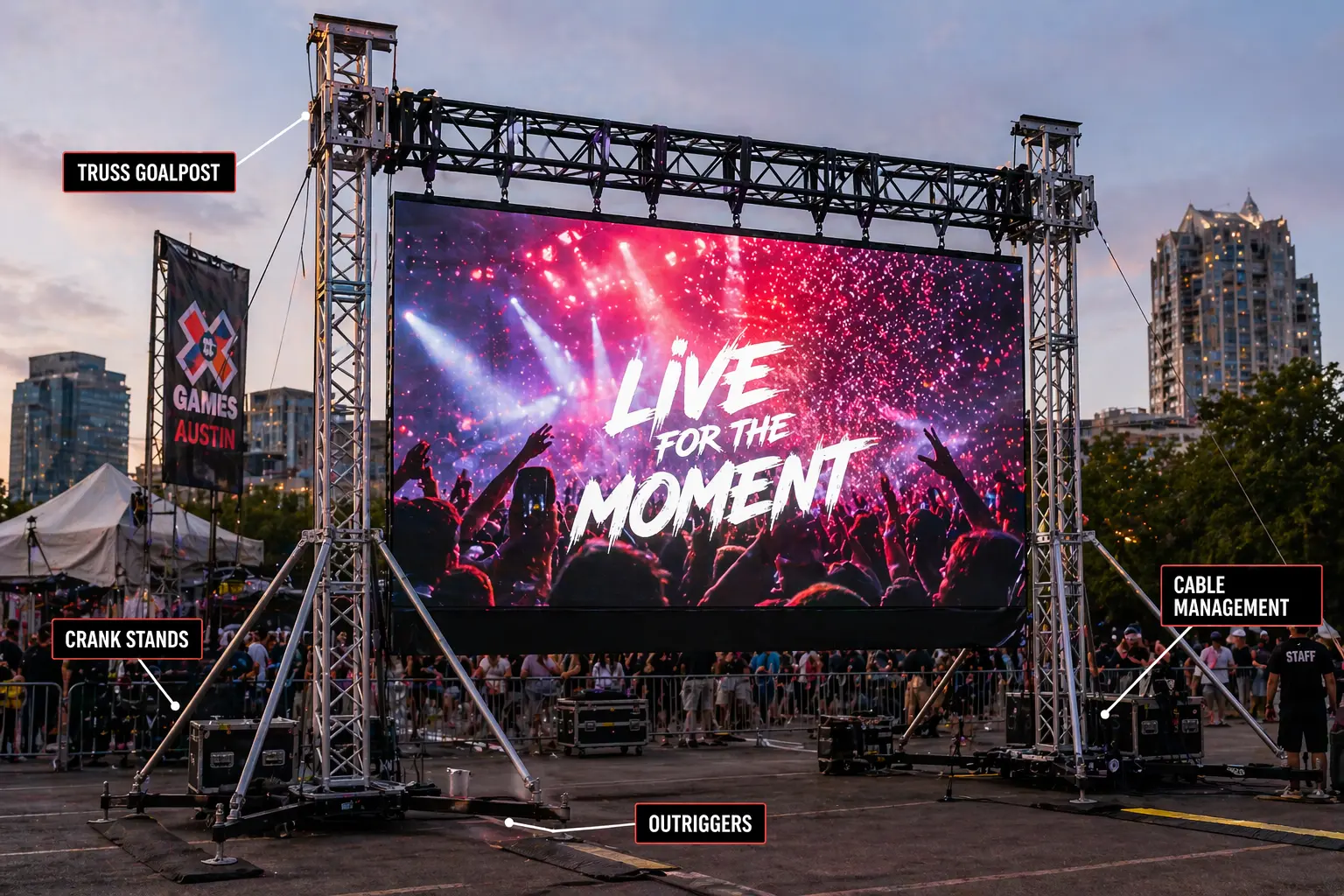
Option 1: Crank Stands with Large Truss and Outriggers (The Goalpost Setup)
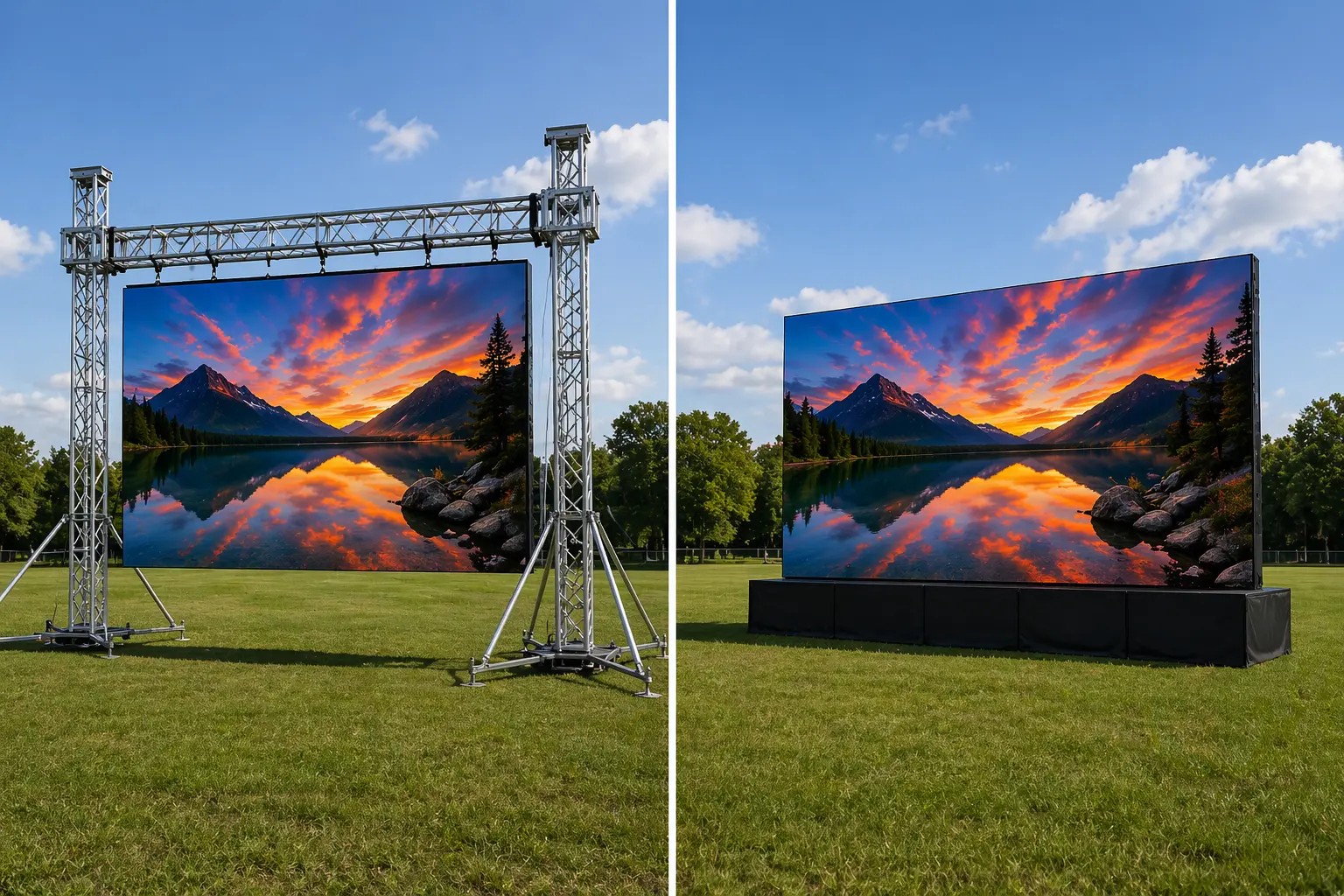
This is the configuration most recognizable from concerts, festivals, school events, and large corporate stages. Two tall crank stands are stabilized with triangular outriggers at the base and support a horizontal truss span across the top. The LED video wall is either hung from that truss or integrated to appear suspended above the stage.
This setup is chosen primarily for its versatility. It works in venues that do not offer ceiling rigging points. It can achieve significant height for large backdrop configurations. It is modular enough to adapt to different wall sizes. And for experienced crews, it is a well-understood workflow that can be deployed efficiently in most environments.
Visually, this setup reads as production. The vertical truss towers, triangular outriggers, cable runs, and visible hardware are part of the aesthetic. At concerts, athletic events, pep rallies, school dances, and brand activations, that visual language matches the energy of the environment and enhances it. In upscale weddings, formal galas, or brand-polished corporate environments, however, it can feel like temporary staging unless the structure is intentionally dressed with drape or scenic elements.
From a practical standpoint, the footprint requires attention. Outriggers and vertical towers take up floor space, which matters in tight ballrooms where they can interfere with ADA access routes, fire lanes, guest sightlines, and photographer movement. Cable management requires deliberate planning to maintain a clean appearance throughout the event.
Best for: concerts, school dances, athletic events, outdoor stages, pep rallies, and brand activations where visible production infrastructure aligns with the event's energy and audience expectations.
Option 2: Two Jack Stands with Spanning Truss (The Lighter Goalpost)
A common variation of the full goalpost system uses two crank stands with a single truss span between them, without the large vertical truss towers of the full goalpost configuration. The result is a streamlined version of the goalpost: fewer visible elements, less structural bulk, but still an elevated LED wall with a familiar support concept.
This approach makes practical sense when the wall is moderate in size, ceiling height is limited, or the goal is to reduce visible metal without sacrificing stability or installation efficiency. It offers a cleaner appearance than full truss towers while retaining a support structure that is straightforward to deploy and familiar to experienced crews.
The tradeoffs are defined by what is removed. Base stands and outriggers are still visible from the audience side. Height and weight limits must be respected, as this configuration is not the right choice for very large or tall walls. Stability planning remains critical regardless of the reduced structural footprint.
This configuration provides a practical middle ground between a full production look and a minimal footprint, making it one of the most commonly deployed setups for mid-scale corporate and educational events.
Best for: corporate stages, medium-sized ballrooms, and school events where a professional, production-appropriate appearance is needed without a festival-scale structure.
Option 3: Ground-Stack System with Hidden Support (The Clean Look)
If you have ever looked at an LED video wall and genuinely wondered how it was standing on its own, you were most likely looking at a well-executed ground-stack system.
Rather than suspending the wall from a truss span overhead, this method supports it from below using engineered ground bases, adjustable feet, rear bracing, and a concealed structural frame. The result is a sleek, minimal presentation where the wall appears almost monolithic from the front, with no visible towers, outriggers, or cable runs interrupting the stage aesthetic.
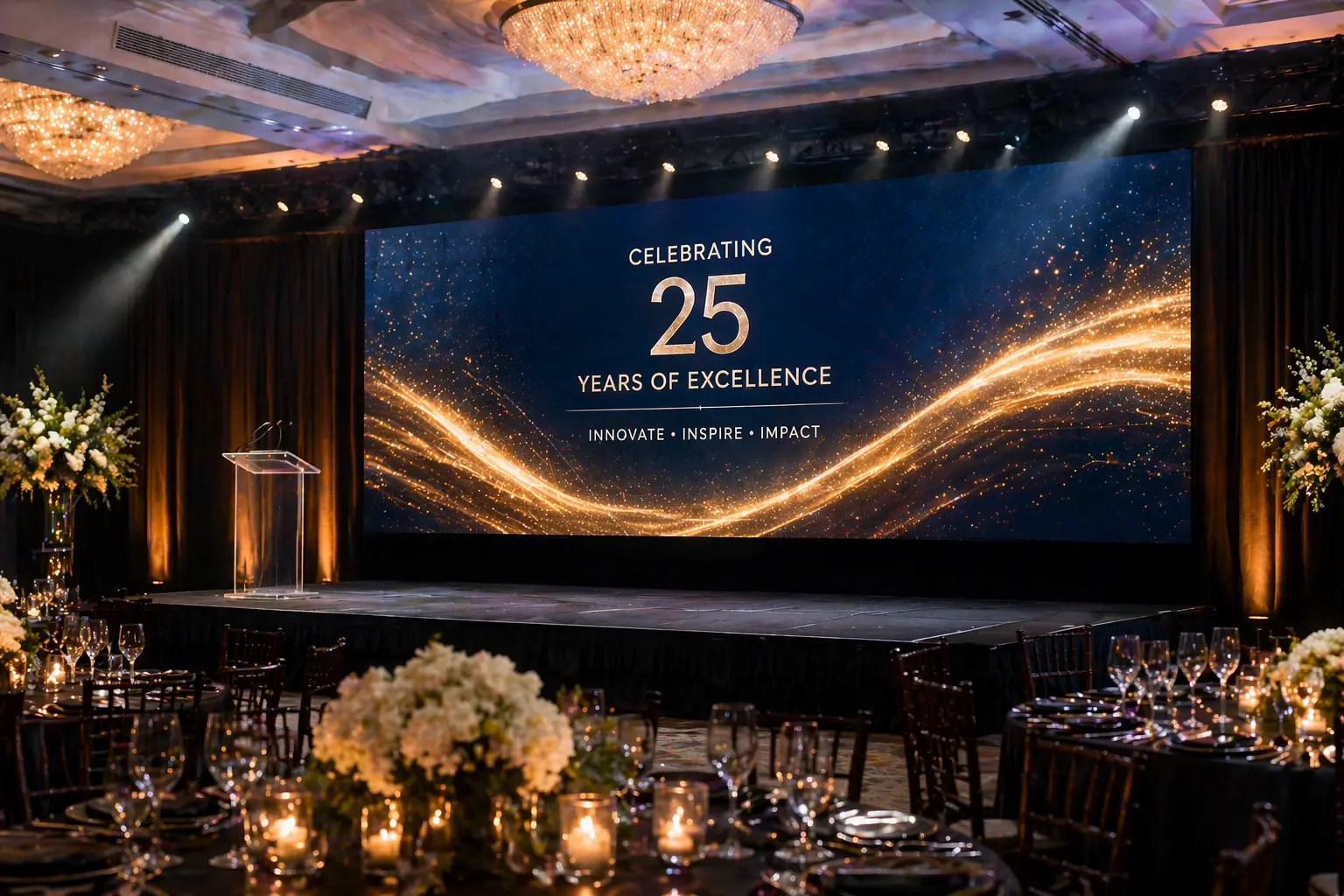
From a field perspective at Portland Production Services, this is the system most frequently recommended for formal corporate environments where stage photography matters. When the structure is completely concealed behind the wall, the installation reads like a permanent fixture rather than a temporary event setup. For a gala keynote or a brand-forward corporate stage, that visual difference is significant.
The advantages are clear: no tall towers blocking side sightlines, cable routing hidden behind the wall panels, and a front-of-house aesthetic that photographs and films without structural hardware appearing in every image.
The tradeoffs require honest planning. Not every wall size can be safely ground-stacked without proper structural engineering. This system typically takes longer to build than a standard goalpost configuration. It demands a solid, level surface and enough depth behind the wall for the rear bracing structure. And because the structure is not visible, it is tempting to underestimate how much engineering and ballast is actually required to make it safe.
The clean look does not mean reduced structural complexity. It means the complexity is managed behind the screen rather than in front of it.
Best for: weddings, galas, keynote stages, corporate events with brand polish, and any environment where photography, video capture, and visual intentionality are primary considerations.
The Decision Factors That Determine the Right Rigging System
Five practical considerations determine which LED video wall rigging system is right for any given event.
Visual priority and event aesthetic. How important is the clean look? If the wall sits behind a keynote speaker, a sweetheart table, or an awards presenter, a hidden or minimal support system is likely worth the additional planning. If it is a dance floor backdrop or a high-energy production stage where visible truss infrastructure enhances the atmosphere, a goalpost system may be entirely appropriate and more efficient.
Available floor space. Outriggers and vertical towers require meaningful floor footprint, and that footprint can interfere with ADA access routes, fire egress lanes, seated guest sightlines, and photographer movement. Ground-stack systems require depth behind the wall for rear bracing rather than width at the base. The venue's actual floor plan determines which trade-off is more manageable.
Wall size and height. Larger configurations require heavier-duty support. Selecting a minimal rigging system purely for aesthetic reasons when the wall dimensions exceed its structural design limits is a safety compromise. The rigging system and the wall size need to be selected together, not independently.
Installation timeline and crew size. Standard truss goalpost systems are generally faster to deploy. A hidden ground-stack system achieves an exceptionally clean result but typically requires more labor hours and more detailed cable management to execute properly. The available load-in window and crew size both factor into which system is actually achievable for a given event.
Venue constraints and policies. Low ceilings restrict crank stand height. Some venues offer no ceiling rigging points. Others enforce strict load ratings or have limited load-in access windows. Rigging choices must align with venue policies before wall dimensions are finalized. This is the conversation to have in the planning phase, not during load-in.
Attaching to the Building vs. Bringing Your Own Structure
One of the most practically significant distinctions in LED video wall rigging is whether the installation attaches to the building itself or uses a self-contained structure brought in by the production team.
Rigging directly to a building requires special licensing, certified riggers, and advance coordination with the venue for structural load approval. It is a different level of complexity and carries more pre-event administrative requirements.
Bringing in a self-contained trussing system with crank stands does not typically require special licensing and is the more operationally straightforward approach for most events. It is also the more adaptable solution for venues that cannot guarantee consistent rigging points or that do not have the ceiling infrastructure to support a flown installation.
For venues and events where the building's structure is not involved, the choice between goalpost and ground-stack systems becomes the primary decision. And for most corporate clients who prioritize how the stage looks on camera, the ground-stack option tends to be the recommendation that lands best.
A Common Mistake Worth Avoiding
The most consistent planning error in LED video wall installations is selecting a wall size first and then trying to design a rigging solution to support it.
When rigging is chosen first, the wall size that emerges from that decision fits the room with intention and avoids structural compromises. When the wall size is locked in before the rigging conversation happens, the team is often forced to work backward, finding a support system that can handle the specified dimensions rather than one that was chosen because it was right for the space.
Start with the venue type, the approximate wall size under consideration, and the event's visual priority. From there, the rigging recommendation becomes straightforward. Finalizing the wall dimensions after the rigging approach is established produces a result that looks intentional from every angle.
Safety and Structural Standards
Regardless of the support method, LED video wall installations must follow manufacturer load ratings and applicable safety standards throughout.
Ground-stack systems rely on ballast weight and rear bracing because the wall's stability depends entirely on weight distribution and the structural integrity of the floor footprint, not on attachment to an overhead structure. Visible truss systems can be dressed with drape or scenic elements for aesthetic purposes, but the structural hardware underneath must never be compromised to achieve a cleaner visual appearance.
Safety is not a secondary consideration in rigging. It is the foundation that makes everything else possible.
Choose the Structure Before You Choose the Screen
LED video wall rigging is not the last item on the production checklist. It is the decision that makes every other decision possible. The right rigging system for your event depends on the venue, the visual priorities, the wall dimensions, the installation timeline, and the experience the audience needs to have when they walk into the room.
There is no universally correct system. A ground-stack approach may be worth the additional planning investment for a gala keynote. A truss goalpost may be the more appropriate and efficient solution for a school event where scale and speed matter more than minimalism.
What is always true is this: when rigging, resolution, power, and layout are aligned from the beginning of the planning process, the LED video wall enhances the room instead of competing with it. Portland Production Services approaches every LED installation as part of the full production plan, with the structure considered first and the screen sized to match.
Ready to Plan Your LED Video Wall Installation?
Share your venue type, your approximate wall size, and whether the atmosphere is formal or high-energy. Portland Production Services will recommend the right LED video wall rigging system for your space and make sure the final result looks exactly as intentional as your event deserves.
Frequently Ask Questions
1: What is LED video wall rigging and why does it matter?
LED video wall rigging refers to the structural system that supports and stabilizes the wall during an event. It determines the wall's safety, its visual presentation from the audience's perspective, its installation efficiency, and how well it integrates with the venue's floor plan and ceiling constraints. Rigging is as important as the screen itself because a wall that is not properly supported cannot perform safely or look the way it should.
2: What are the three main types of LED video wall rigging systems?
The three primary systems are the goalpost truss with crank stands and outriggers (high-energy production look, adaptable to most venues), the two-stand spanning truss (streamlined goalpost variation with less structural bulk), and the ground-stack system with hidden support (concealed structure, clean front-of-house aesthetic preferred for formal events). Each suits a different event type, venue, and visual priority.
3: Which LED video wall rigging system looks best on camera?
For events where photography and video documentation are priorities, such as corporate galas, keynote presentations, and weddings, the ground-stack system with hidden support consistently produces the cleanest result. When the rigging structure is fully concealed behind the wall, the installation reads like a permanent fixture rather than temporary event equipment, which photographs and films without hardware interrupting the stage aesthetic.
4: Does rigging directly to the building require special licensing?
Yes. Rigging an LED video wall directly to a venue's ceiling or structural elements requires special licensing, certified riggers, and advance coordination with the venue for structural load approval. Bringing in a self-contained truss and crank stand system does not typically require special licensing and is the more operationally practical approach for most event venues.
5: How much floor space does LED video wall rigging require?
Floor space requirements vary by rigging style. Goalpost truss systems with outriggers require the most footprint, extending outward from the base of the towers and potentially interfering with seating sightlines, ADA routes, and fire lanes. Ground-stack systems require depth behind the wall for rear bracing rather than width at the base. The specific dimensions should always be evaluated against the venue floor plan before installation is confirmed.
6: Should the rigging system or the wall size be decided first?
The rigging system should always be decided first. Starting with wall size and then designing rigging to support it often leads to last-minute structural compromises. Starting with the rigging approach, based on the venue, event aesthetic, and floor plan, leads naturally to a wall configuration that fits the space with intention. Portland Production Services recommends discussing the venue and event format first before finalizing any wall dimensions.
Key Takeaways
- LED video wall rigging is a structural and visual decision that should be made before the wall size is finalized, not after.
- The three primary rigging systems each serve a different event context: goalpost truss for high-energy production environments, spanning truss for a balanced corporate look, and ground-stack for formal or brand-polished events where photography matters.
- The ground-stack system with hidden support is the cleanest visual solution for corporate galas, keynotes, and weddings, but it requires more planning, labor, and structural engineering than a standard goalpost configuration.
- Rigging directly to a building requires special licensing and advance venue coordination. Self-contained truss systems with crank stands are the more operationally practical choice for most events.
- Portland Production Services integrates LED video wall rigging decisions into the full event production plan from the beginning, ensuring the structure, the screen, the power, and the placement all work together.
There's more ...


Unleash Your Inner Creative Madness With Us!
info@portlandproductionservices.com
503-317-6447
© Portland Production Services 2026
8816 SE 29TH AVE
MILWAUKIE OR 97222-6323, US

