




How to Make a Marketing Video That Actually Converts
A marketing video that converts is built around one clear action, a compelling hook, persuasive storytelling, strong production fundamentals, and a direct call to action that guides viewers toward the desired result.
Plenty of marketing videos get made. Far fewer get made to convert. The difference is not budget or gear, it is a series of deliberate choices, most of them made before anyone hits record, that point every second of the video at a single action you want the viewer to take.
This is a step-by-step guide to making a marketing video that does its job. Follow it whether you are shooting it yourself or briefing a partner, and the result will outperform the polished-but-pointless videos filling everyone's feeds. When the stakes are high enough to justify it, marketing video production engineered to convert follows these exact principles at a professional level. But the thinking works at any budget, so let us walk through it.
Step 1: Define the One Action You Want
Before anything else, answer one question: what do you want the viewer to do after watching? Book a call, buy the product, fill out the form, subscribe. One action, not three.
This is the step almost everyone skips, and skipping it is why most marketing videos fail to convert. A video built around a single, clear action will always outperform one trying to accomplish several things at once. Every later decision, the script, the length, the call to action, flows from this one answer. Pick it first and write it down.
Step 2: Know Exactly Who You Are Talking To
A video that talks to everyone converts no one. Before you script a word, get specific about the one person you are talking to: their problem, what they already believe, what is stopping them from acting, and what would change their mind.
The more sharply you define this person, the more your video can speak directly to them. Generic marketing video feels generic because it was made for a generic audience that does not exist. Conversion comes from a viewer feeling like the video was made for them specifically. A small business often has a real advantage here, because owners frequently know their customers more intimately than a big brand ever could.
Step 3: Win the First Three Seconds
In every feed, on every platform, the viewer decides almost instantly whether to keep watching. If your video opens with a logo animation or a slow wind-up, you have lost most of your audience before the message starts.
Open with the hook: the problem, a bold statement, a surprising visual, or the payoff itself. Give the viewer an immediate reason to stay. The first three seconds are not the introduction to your video. They are the audition for the rest of it, and conversion is impossible if no one watches past the opening.
Step 4: Script for Conversion, Not for Information
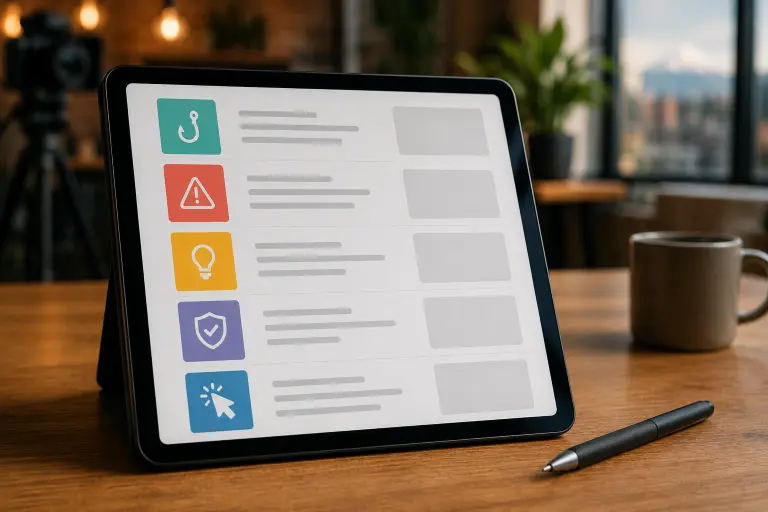
A converting marketing video follows a persuasion structure, not an information dump. The reliable pattern looks like this: open with the hook, name the problem the viewer feels, present your solution, prove it works, and end with the single action from Step 1.
Resist the urge to say everything. A video that explains every feature converts worse than one that lands a single compelling point. Cut anything that does not move the viewer toward the action. Proof matters most here, which is why customer evidence is so powerful. A real result, shown clearly, removes the doubt that stalls conversion better than any claim you make about yourself.
Step 5: Get the Production Basics Right
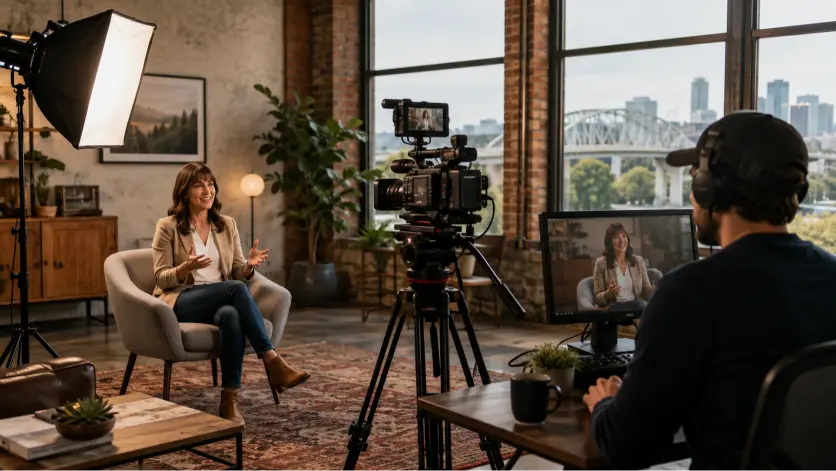
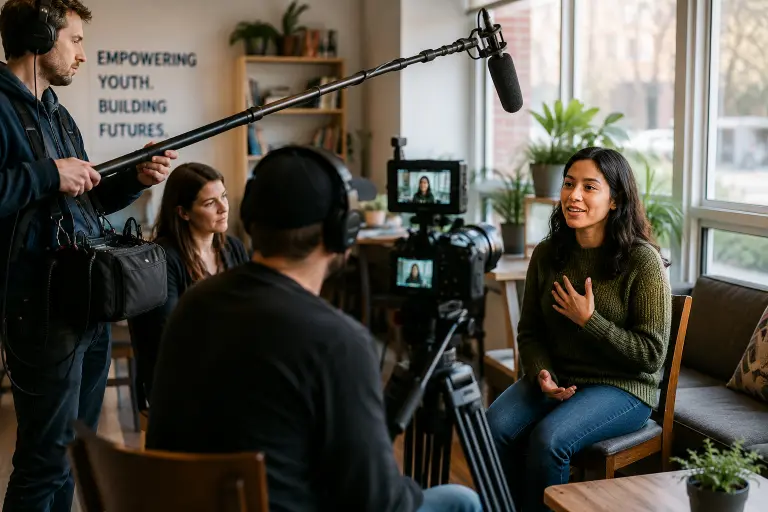
You do not need a Hollywood budget to convert, but you cannot ignore three fundamentals: light, sound, and framing.
Light your subject well. Soft, even light on a face reads as professional. Harsh shadows or dim footage reads as amateur. Natural light from a window often works beautifully.
Audio matters more than video. Viewers forgive mediocre visuals but abandon bad audio instantly. A simple external microphone close to the speaker makes a bigger difference than an expensive camera.
Frame and stabilize intentionally. A steady, well-composed shot signals care. Shaky, poorly framed footage signals the opposite. These three basics alone separate video that builds trust from video that quietly erodes it. This is also exactly where the gap between DIY and professional marketing and promotional video shows up most, because pros make these fundamentals invisible.
Step 6: Edit for Attention and Pacing
The edit is where a marketing video is won or lost. Even great footage converts poorly if the pacing drags.
Cut tight. Remove every pause, filler word, and moment that does not earn its place. Match the pacing to the platform and the message, fast and punchy for social, more measured for a considered purchase. Add captions, because a large share of viewers watch muted and an uncaptioned video loses them. Keep the energy up throughout, because the moment attention drops, so does your conversion.
Step 7: Optimize for Where It Will Live
The same video needs different treatment depending on where it runs. A vertical cut for Reels and Shorts, a different framing for YouTube, a version sized for your landing page.
Build with the destination in mind. A horizontal video forced into a vertical slot looks careless, and careless does not convert. If you plan the platforms before you shoot, you can capture footage that cuts cleanly into every format you need from one source, which is far more efficient than reshooting.
Step 8: Make the Call to Action Impossible to Miss
This is where conversion actually happens, and where many otherwise good videos fizzle. End with the single action from Step 1, stated clearly and directly. Tell the viewer exactly what to do next and make it easy.
Do not bury it, do not soften it, and do not offer five options. One clear instruction, delivered with confidence, at the moment the viewer is most persuaded. A strong video with a weak call to action leaves the conversion on the table.
Step 9: Measure, Then Improve
A converting video is rarely the first version. Publish it, watch how it performs against the single action you defined, and learn. Where do viewers drop off? Does the call to action work? Which hook holds attention?
The data tells you what to fix. Marketing video is a skill that compounds, and every video teaches you something that makes the next one convert better. The brands that win treat video as an iterative process, not a one-time gamble.
When to Bring in a Professional
These principles work at any budget, and for plenty of content you can execute them yourself. But when a video carries real weight, a brand-defining piece, a high-stakes ad, a video for an industry where trust drives the sale like healthcare or construction, professional execution turns these principles into results you can count on.
A team that does this daily makes the hook sharper, the audio cleaner, the pacing tighter, and the conversion higher. The Wheelkraft Northwest project is a working example of these conversion principles applied at a professional level for a specialty brand. PPS has produced converting marketing video for Pacific Northwest businesses for over 20 years, with owned gear and an in-house crew across Portland, Beaverton, Hillsboro, Lake Oswego, Tigard, and Vancouver, WA.
Conversion Is a Choice, Made Early
A marketing video that converts is not luck and it is not budget. It is a sequence of deliberate decisions, starting with one clear action and carried through every step from hook to call to action. Make those choices on purpose and your video will outperform the prettier ones that forgot to have a point.
The footage is the easy part. The thinking is what converts.
Want a Marketing Video Built to Convert From the Start?
Portland Production Services brings 20+ years of conversion-focused marketing video experience, fully owned gear, and a local Pacific Northwest crew to brands that want results, not just footage.
Book a consultation with Portland Production Services and tell us the one action your video needs to drive. We will build the whole thing around it.
Already made videos with PPS? Share your experience in a quick review and help the next Portland business create video that converts.
Frequently Asked Questions
1.How do you make a marketing video that converts?
Start by defining the single action you want viewers to take, then build everything around it: a sharp hook in the first three seconds, a script structured as hook, problem, solution, proof, and call to action, solid lighting and audio, tight editing, and a clear closing instruction. The key is that every choice points at one conversion goal rather than trying to do everything at once. Conversion is decided in planning, not in filming.
2.What makes a marketing video effective?
An effective marketing video has one clear goal, speaks to a specific audience, hooks attention immediately, and ends with a single obvious call to action. Strong but unobtrusive production fundamentals, good light, clean audio, and steady framing, build the trust that supports conversion. The most effective videos cut everything that does not move the viewer toward the intended action.
3.How long should a marketing video be?
Length should match the platform and the goal, not a fixed rule. Social and top-of-funnel videos often work best between fifteen and sixty seconds, while a considered-purchase explainer or testimonial can run longer because the viewer is already interested. The reliable principle is to make it exactly as long as it needs to be to drive the action, and not a second longer.
4.Can I make a conversion marketing video myself?
Yes, for many types of content. If you define a clear goal, nail the first three seconds, prioritize clean audio, edit tightly, and end with a direct call to action, a DIY marketing video can convert well. For high-stakes videos that represent your brand at decisive moments, professional production applies these same principles with a reliability that protects the investment.
Key Takeaways
- Conversion is decided before filming. Defining the one action you want the viewer to take is the single most important step, and everything else flows from it.
- Win the first three seconds and script for persuasion, following a hook, problem, solution, proof, and call to action structure rather than dumping information.
- Audio, light, and pacing carry the trust that makes conversion possible, and tight editing with captions keeps viewers watching to the call to action.
- These principles work at any budget, and for high-stakes videos PPS applies them at a professional level with 20+ years of Pacific Northwest experience, owned gear, and a local crew.
There's more ...

Unleash Your Inner Creative Madness With Us!
info@portlandproductionservices.com
503-317-6447
© Portland Production Services 2026
8816 SE 29TH AVE
MILWAUKIE OR 97222-6323, US

