



How Much Does a Commercial Video Cost? A Practical Guide for Businesses
Commercial video production costs vary based on scope, crew, and post-production. The right investment creates high-quality videos that build trust, drive conversions, and deliver long-term ROI. Portland Production Services produces custom videos tailored to your business goals.
Commercial video production costs are scope-driven, not standardized. The biggest cost variables are experience and decision-making, crew size, equipment, lighting, location complexity, and post-production scope. Lower-cost options trade production quality for speed and simplicity. Higher-end production trades a larger investment for content that performs across channels, builds brand credibility, and generates long-term ROI. This guide breaks down every cost driver honestly, explains what each element actually contributes to the final result, and explains why the starting question is never how much should I spend but what does this video need to accomplish. For a custom scope and quote, contact Portland Production Services directly.
What Is a Commercial Video?
Before discussing commercial video cost, it is worth establishing what commercial video actually encompasses, because the range is wider than most businesses initially assume.
A commercial video is any professionally produced video content designed to promote or represent a business. That includes brand overview films that communicate who the company is and what it stands for, customer testimonial videos that provide social proof at the consideration stage, service and product explainer videos that remove sales friction, recruiting and culture videos that attract the right candidates, promotional ads built for paid media campaigns, and event highlight reels that extend the reach of live experiences.
These videos are rarely used in one place. A single well-produced commercial video can be distributed across a website, paid ad campaigns, email sequences, sales proposals, social media platforms, and trade show presentations simultaneously. That multi-channel usability is what transforms a single production investment into a long-term business asset rather than a one-time deliverable, and it is one of the primary reasons the investment conversation is more accurately framed around return than cost.
What Drives Commercial Video Cost
Understanding commercial video pricing means understanding which production elements actually drive price, and what each one contributes to the final result. These are the variables that matter.
Experience and Decision-Making
Experience is the most significant cost driver in commercial video production and the one that delivers the most non-obvious value.
An experienced production team does not just execute a brief. They make the decisions that determine whether the video performs: how the interview subject is framed to communicate authority rather than anxiety, where the lighting is positioned to create depth rather than flatness, how the messaging is structured to earn attention in the first three seconds, how on-camera talent is coached to deliver naturally under pressure.
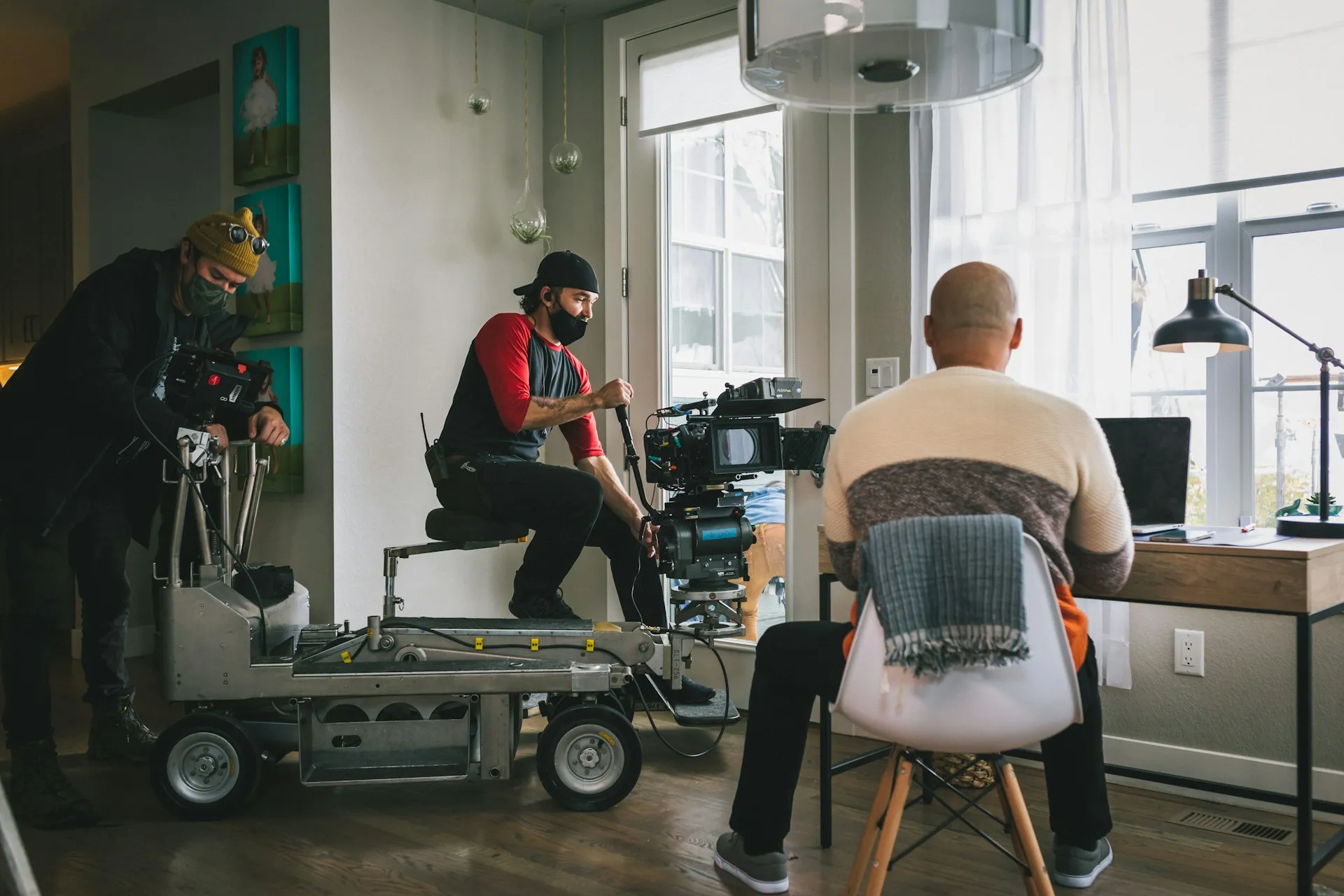
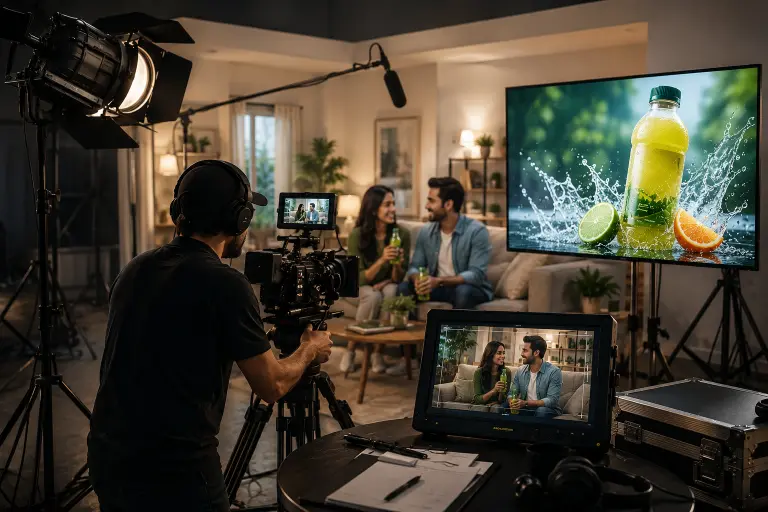
These decisions happen continuously throughout a production day and they are invisible in the final product when they are made correctly. From Portland Production Services' direct experience: a typical professional commercial setup involves five or six different lighting sources shaping the scene, multiple microphones managed by a dedicated audio specialist, multiple camera operators, and a director of photography coordinating everything behind the scenes. When budgets compress and those elements start getting removed, what changes is not just the technical specification. It is the quality of every judgment call that the remaining team can make under reduced conditions.
Businesses investing in professional commercial video production are paying for judgment as much as equipment. That judgment is what creates the difference between a video that builds credibility and one that undermines it.
Equipment
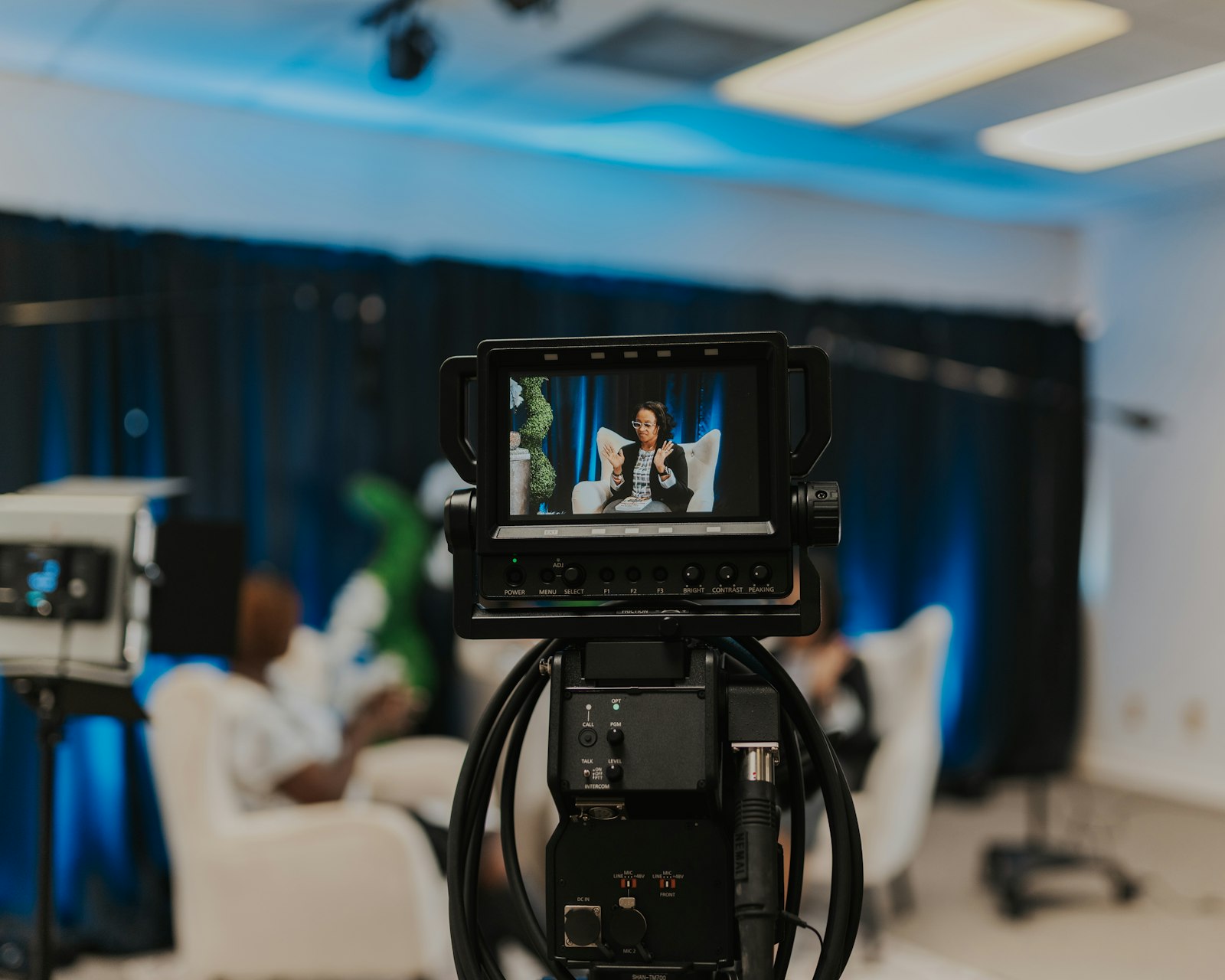
Professional commercial video production uses cinema-grade cameras, specialized lenses, external monitoring systems, and dedicated broadcast-quality audio equipment. These tools produce better image quality, cleaner sound, and more consistent results across different production environments.
Equipment matters most in challenging conditions: on-location shoots with inconsistent lighting, interview environments with acoustic complications, multi-location productions where consistency across different settings is required. The right gear in experienced hands produces results that consumer equipment cannot match. But equipment alone does not determine quality. A well-equipped team with a weak production process produces expensive footage that still does not perform.
Lighting
Lighting is the single most visible differentiator between amateur and professional video, and it is the element most frequently underestimated by clients evaluating their first commercial video investment.
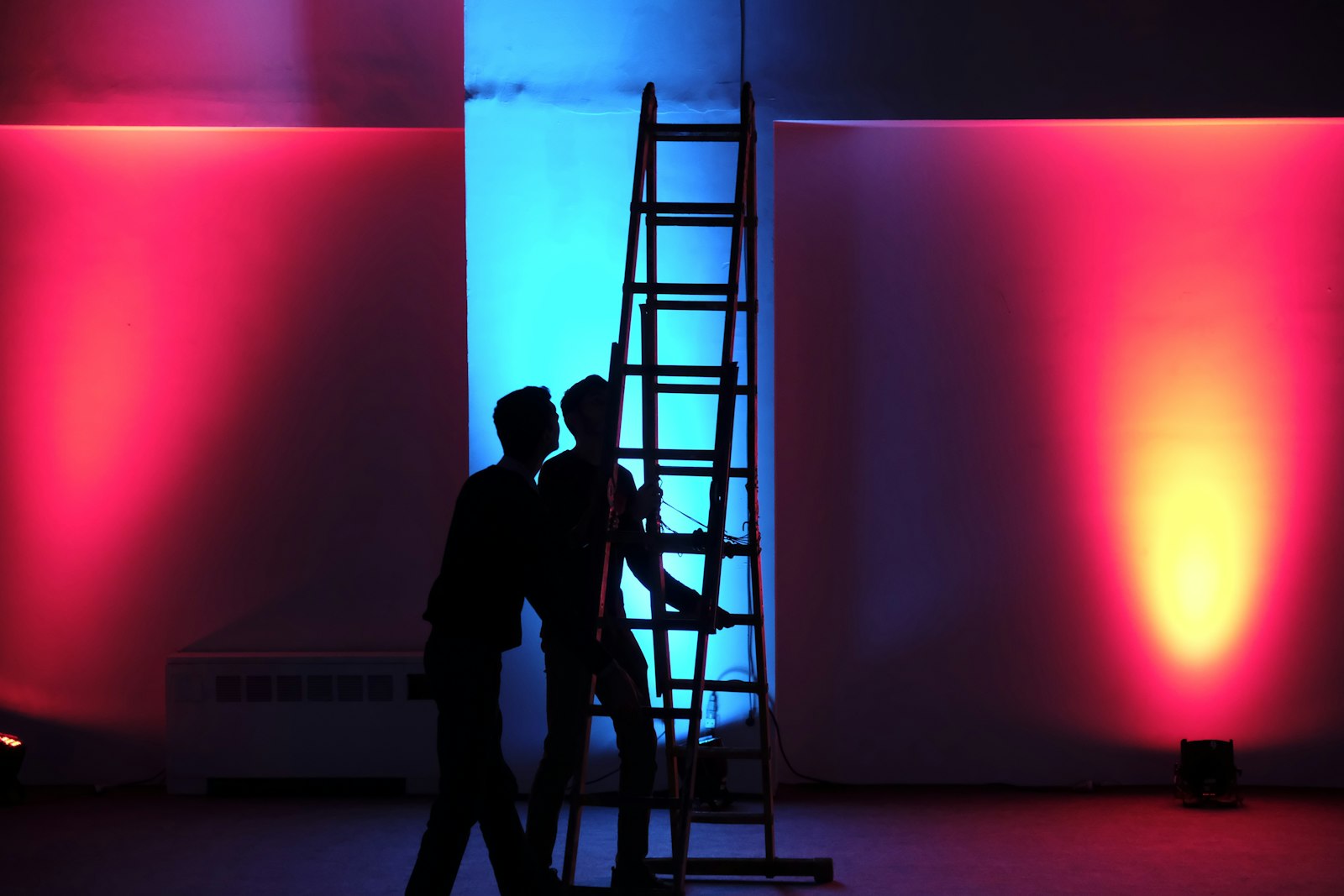
Professional lighting improves how people appear on camera: it creates the depth and separation that makes subjects look present and three-dimensional rather than flat, it aligns the visual tone with the brand's positioning, and it ensures consistency across a full production day as natural light shifts and venue conditions change.
It also requires significant time, planning, and adjustment, particularly in real-world environments that were not designed for cameras. A production setup with six carefully positioned lights and a dedicated gaffer produces a qualitatively different visual result than a setup with a single camera-mounted fill light, and that difference is immediately perceptible to every viewer who watches the final video.
Location Complexity
Where a commercial video is filmed directly affects how long production takes and how much coordination it requires.
Controlled environments like dedicated studios or office spaces designed to accommodate production are predictable: lighting conditions are manageable, acoustics can be controlled, and setup is efficient. On-location shoots in real-world environments introduce variables that require active management: background noise that competes with dialogue, lighting inconsistencies between different areas of the same space, power constraints that limit equipment options, and space limitations that affect camera placement.
Each variable adds setup time, testing time, and adjustment time. Multiple locations multiply these factors. Productions involving complex on-location environments cost more because they take longer and require more experienced crews to manage the variables that the environment introduces.
Crew Size
Not every commercial video production requires the same size crew, and the right crew size is determined by the project's scope, not by a preference for minimalism.
Depending on the production's complexity, a crew might include a director or producer, one or more camera operators, an audio specialist, a lighting technician, a production assistant, and a director of photography who coordinates the visual execution. A larger crew increases production value, execution efficiency, and quality consistency. It also increases cost.
The principle is not to minimize crew size. It is to match crew size to what the project actually requires. A production that compresses the crew below what the scope demands sacrifices something at every stage: shot quality, audio reliability, lighting consistency, or schedule management.
Post-Production Scope
Filming produces raw footage. Post-production produces the video.
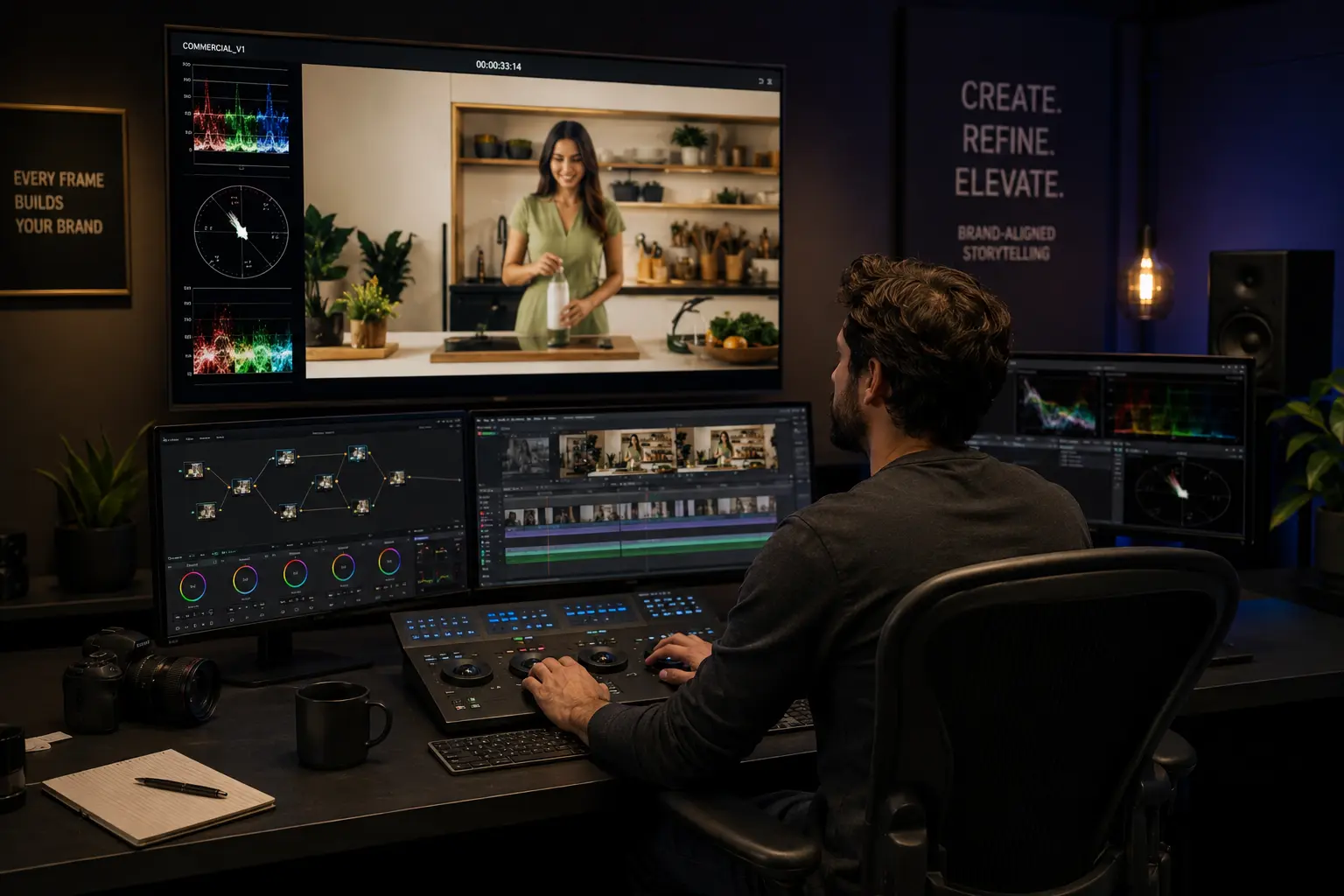
Professional commercial video post-production includes editing and pacing, color grading that creates visual consistency and brand alignment, audio cleanup and sound design, motion graphics and title overlays, music licensing, and revision rounds. More complex projects require more time in this phase: a multi-location brand film has a different editing scope than a single-subject testimonial, and a campaign that requires multiple format deliverables (horizontal, vertical, square, captioned versions) has a different delivery scope than a single master cut.
Post-production is where the story is shaped, the brand identity is reinforced, and the final asset is prepared for every channel where it will be deployed. Treating it as an afterthought produces content that looks unfinished.
Typical Commercial Video Production Investment Levels
Every commercial video project is scoped individually based on goals, complexity, and what the content needs to accomplish. As a general framework, professional commercial video production typically reflects three levels of scope and investment.
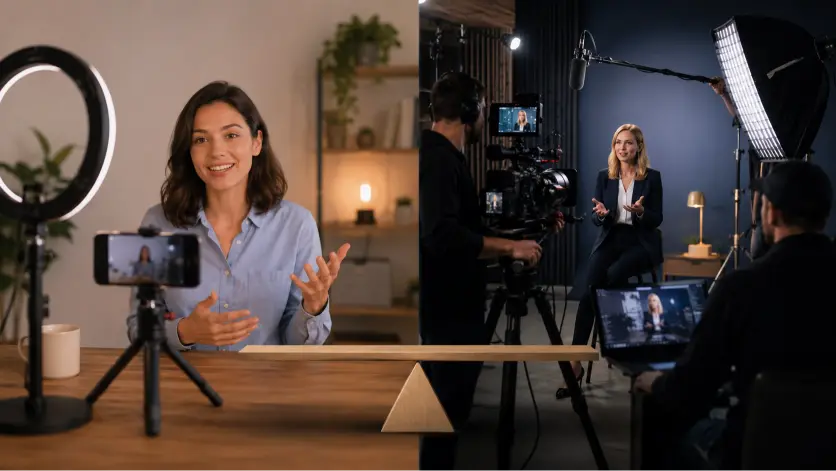
Entry-level production covers basic setups with a minimal crew, simple lighting, and straightforward post-production. Appropriate for internal communications, basic social content, or early-stage brand presence with limited distribution requirements.
Mid-level production adds structured lighting, a dedicated audio engineer, planned shot lists, and professional post-production with color grading and motion graphics. Appropriate for service explainers, testimonials, and marketing videos that will live on a website, in email campaigns, or in paid social.
Full-scale production covers multi-location shoots, larger crews, advanced lighting design, and comprehensive post-production with multiple format deliverables. Appropriate for brand films, paid media ad campaigns, and content representing the brand at its most visible and most competitive touchpoints.
For a custom quote based on your specific project, goals, and distribution plan, contact Portland Production Services directly. Every project is scoped based on what it actually requires to perform, not on a flat-rate package.
Why Cheap Commercial Video Costs More in the Long Run
The most expensive commercial video is usually the cheap one that needs to be redone.
Low-cost production consistently produces the same downstream problems: audio that is difficult to hear, visuals that are flat or inconsistent, messaging that was not developed with the audience in mind, and an overall production quality that signals unprofessionalism to every viewer before the content has a chance to communicate anything else.
The compounding cost of poor production quality includes the direct cost of reshooting content that does not perform, the indirect cost of paid media campaigns running on creative that reduces rather than improves conversion rates, and the brand damage that accumulates every time a prospect encounters a video that communicates inadequacy rather than credibility.
When the starting question is "how do I spend as little as possible," the answer almost always produces content that fails to justify even the reduced investment. When the starting question is "what does this video need to accomplish and what level of production quality does that outcome require," the investment decision becomes significantly clearer.
How Batching Content Improves Commercial Video ROI
One of the most effective ways to maximize a commercial video production investment is content batching: producing multiple videos in a single production session rather than one at a time.
A single production day covers setup, lighting, location coordination, and crew time. When one video is produced per day, all of those fixed costs are allocated to a single deliverable. When multiple videos are produced in the same session, those fixed costs are distributed across a larger content library.
Businesses that batch their commercial video production leave each session with a primary hero video, multiple supporting testimonial or product clips, short-form social cuts, and additional footage for future edits, all from a single investment in setup and crew time. That content library supports months of distribution across every channel without requiring additional production sessions.
For organizations building a content-driven marketing strategy, batching is the structural decision that transforms a production budget from a periodic expense into a systematic content infrastructure.
Pre-Production Is Where Value Is Created
The stage of commercial video production that most directly determines whether the final video performs is also the stage most likely to be compressed or skipped when budgets are tight: pre-production.
Pre-production is where the business goal is translated into a creative brief, the messaging is aligned with what the target audience actually needs to hear, the script or structural outline is developed, the visual approach is planned, and the production logistics are coordinated. Strong pre-production produces efficient shoot days, clear communication between the client and the production team, and final content that reflects an intentional creative strategy rather than improvised execution.
Skipping pre-production does not save money. It transfers the cost of poor planning into every subsequent phase of the production: a shoot day that runs long because nothing was planned, revision cycles that chase a vision that was never clearly defined, and final content that misses the mark because the strategic foundation was never established.
Portland Production Services treats pre-production as a required investment in every engagement, not an optional service.
The Right Question Is Not "How Much Should I Spend?"
The most productive starting point for any commercial video cost conversation is not the budget number. It is the business problem.
What is the video designed to accomplish? Who is the audience and what do they need to believe or do after watching it? Where will the video be distributed and what production quality does that distribution environment require? What does a successful outcome look like in measurable terms?
The answers to those questions determine the scope, and the scope determines the investment. A video designed for a homepage brand introduction serving as the primary trust signal for a high-consideration purchase has different production requirements than a video designed for an internal team update. A paid media ad that will be seen by tens of thousands of prospects has different quality standards than a social clip for organic distribution.
Starting with the business problem ensures that the production investment is calibrated to what the video actually needs to do, not to a number that feels comfortable independent of the outcome.
Commercial Video Production Services
The table below outlines what Portland Production Services delivers across commercial video production formats and what each one is designed to accomplish.
Commercial Video Production- Brand films, ads, and campaign content for broadcast, digital, and social platforms. Businesses building paid media creative, launching products, or establishing brand presence
Marketing and Promotional Videos- Awareness and funnel-driving content built for performance across digital channels. Businesses building an ongoing content strategy or launching a new service
Corporate and Training Videos- Scalable internal communication, onboarding, and training content. Enterprises, HR teams, and businesses with distributed workforces
Nonprofit Storytelling- Mission-driven commercial content for donor campaigns and community fundraising. Nonprofits producing fundraising and stewardship video content
Event Production and Live Streaming- Full-scale event production with video capture and live streaming. Organizations whose events generate commercial video content and live stream assets
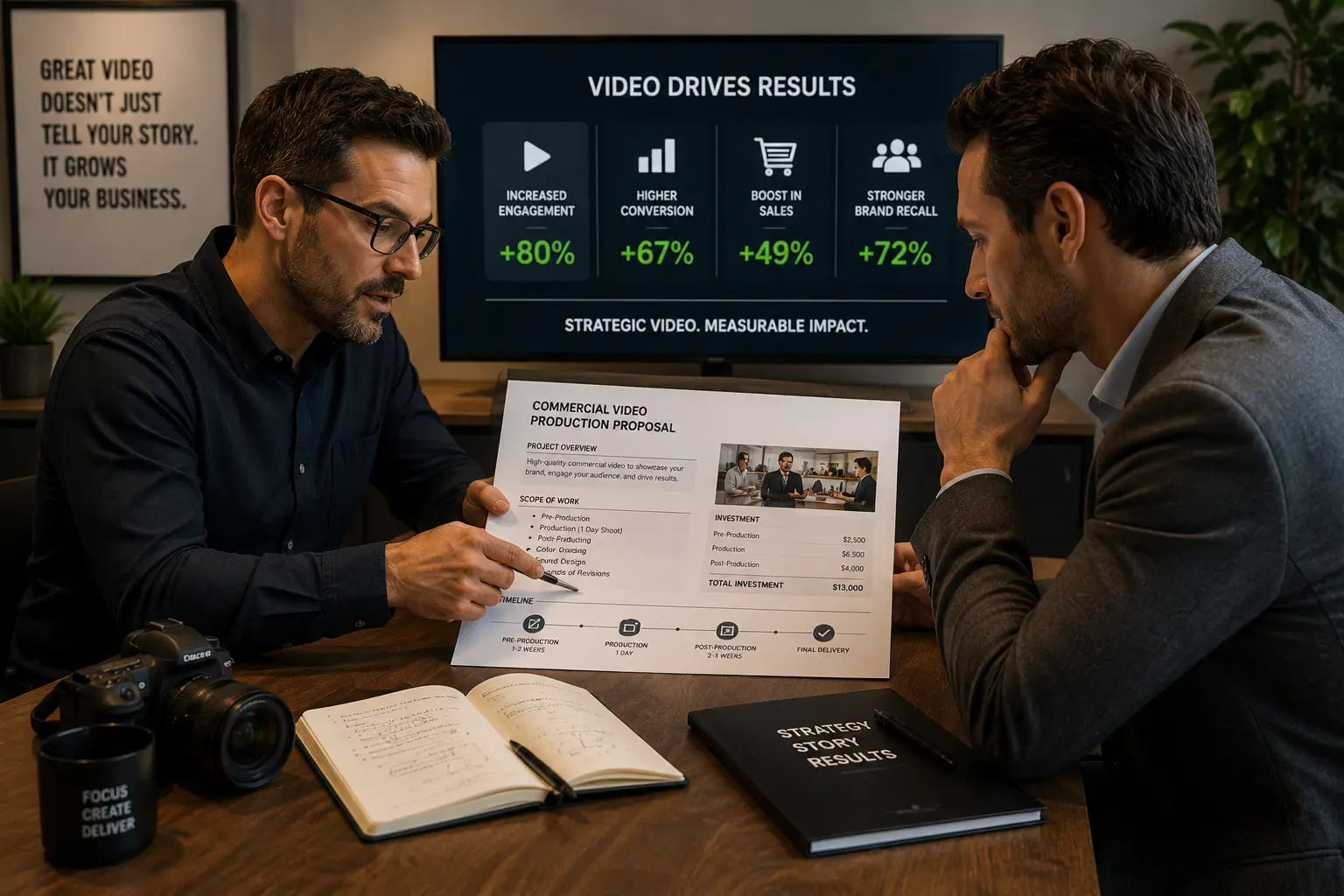
Commercial Video Is a Business Investment, Not a Creative Expense
Commercial video cost is only meaningful in the context of what the video is designed to accomplish. A production that costs less than what the goal requires is not an efficient investment. It is an incomplete one.
The businesses that consistently generate strong returns from commercial video production are the ones that start with the outcome, align the production scope to that outcome, invest in the experience and process that produces content capable of performing, and treat each video as a long-term asset across multiple channels rather than a single-use deliverable.
Portland Production Services approaches every commercial video engagement with that standard: scope driven by the business goal, production quality matched to the distribution environment, and content built to deliver results beyond the date it is published.
Ready to Invest in Commercial Video That Actually Delivers?
The right commercial video does not just look good. It earns trust, drives conversions, and keeps working for your business long after filming day is over. Portland Production Services will walk you through exactly what your project requires and what it will return. Tell us what you need to accomplish and we will build the scope to match.
Frequently Ask Questions
1: What is the average cost of commercial video production?
Commercial video production costs are scoped individually based on the project's goals, complexity, crew requirements, location, and post-production scope. Entry-level productions cover basic setups with minimal crew. Mid-level productions add structured lighting, dedicated audio, and professional post-production. Full-scale productions cover multi-location shoots, larger crews, and comprehensive delivery. Contact Portland Production Services for a custom quote based on your specific project and goals.
2: What affects commercial video pricing the most?
The biggest drivers of commercial video cost are the experience level of the production team and the quality of their decision-making, crew size and specialization, lighting complexity, location requirements, and post-production scope including revision rounds and multi-format delivery. Equipment matters but is not the primary differentiator. A well-equipped team with weak production experience produces expensive footage that still does not perform.
3: Is it worth producing multiple commercial videos at once?
Yes. Batching commercial video production across a single production session distributes the fixed costs of setup, crew, and location across multiple deliverables. The result is a larger content library at a lower per-video cost, with visual consistency across all assets because they were all produced in the same conditions by the same team. For businesses building a content-driven marketing strategy, batching is one of the highest-leverage production decisions available.
4: Why does the cheapest commercial video option often backfire?
Because poor production quality produces downstream costs that almost always exceed the initial savings. Content that does not perform requires reshooting. Paid media campaigns running on weak creative produce higher cost per acquisition. And brand perception damage from an unprofessional video is difficult to reverse. The lowest-cost commercial video is almost never the most cost-effective one when the full cost of underperformance is accounted for.
5: How long does commercial video production take?
Most professional commercial video projects run from a few days for simple single-location productions to several weeks for complex multi-location campaigns. The timeline is determined by pre-production planning depth, shoot complexity, and post-production scope including revision rounds and multi-format delivery. Projects that compress pre-production to accelerate the timeline almost always extend the overall duration through additional revision cycles.
6: How does Portland Production Services determine commercial video scope and cost?
Portland Production Services begins every commercial video engagement with a conversation about the business goal, the target audience, the distribution plan, and what a successful outcome looks like in measurable terms. The production scope is built around those answers, not around a standard package. Every quote reflects what the project actually requires to perform at the level the goal demands. Contact the team directly for a custom scope and pricing conversation.
Key Takeaways
- Commercial video cost is determined by scope, not by a standard price list. The most important variables are experience and decision-making quality, crew size, lighting complexity, location requirements, and post-production scope.
- Experience is the most significant and most underestimated cost driver. An experienced production team makes the judgment calls throughout pre-production, production, and post-production that determine whether the final video performs or merely exists.
- Cheap commercial video production almost always costs more in the long run through reshoots, underperforming paid media campaigns, and brand perception damage that compounds over time.
- The right starting question for any commercial video investment is not "how much should I spend" but "what does this video need to accomplish and what production quality does that outcome require."
- Portland Production Services scopes every commercial video engagement around the client's specific business goal and distribution plan, with twenty-plus years of production experience behind every decision.
There's more ...

Unleash Your Inner Creative Madness With Us!
info@portlandproductionservices.com
503-317-6447
© Portland Production Services 2026
8816 SE 29TH AVE
MILWAUKIE OR 97222-6323, US

