





Corporate Video Production: A Complete Guide to Creating Videos That Grow Your Business
Discover how corporate video production helps businesses improve communication, strengthen their brand, and achieve measurable results.
Almost nobody wants to watch a corporate video. That is the honest starting point, and any guide that pretends otherwise will produce exactly the kind of video nobody watches: the one with the drone shot of the office building, the CEO reading a script at a lectern, and the stock music that sounds like a bank commercial from 2009.
Corporate video works when it stops trying to look like corporate video. It works when it saves someone time, answers a question they actually had, or shows them something they could not otherwise see. This guide covers what corporate video production genuinely accomplishes, where it earns its budget, and how to make the kind nobody skips. When you are ready to build it, corporate and training video production is where this becomes real.
What Corporate Video Production Actually Covers
Corporate video is a category defined by audience rather than format. It serves the organization as an institution, speaking both outward to markets and inward to the people who work there.
That breadth is why the term confuses people. A recruitment film, a safety training module, a capability video for procurement buyers, and a CEO's quarterly message are all corporate videos, and they share almost nothing except a client. What unites them is that they serve the company's operations and reputation rather than a specific advertising campaign, which is the line separating corporate video from commercial video production.
Get that distinction right and the budget conversation gets easier, because corporate video is frequently justified by cost savings rather than by revenue.
The Two Audiences, and Why They Need Different Films
Everything in corporate video sorts into content for people outside the company and content for people inside it. Confusing the two produces videos that fail both.
External Corporate Video
External corporate video speaks to clients, prospects, partners, investors, and the public. It establishes credibility rather than driving a specific purchase.
The brand or company film answers who you are and why you exist, and lives on your homepage and in your sales deck.
Capability and facility videos show what you can actually do. For a manufacturing firm providing precision to a procurement buyer, or a construction company demonstrating scale to a developer, footage of real work is worth more than any specification sheet.
Customer story and case study videos let clients vouch for you, which converts skeptical buyers faster than anything you say about yourself.
Investor and stakeholder videos communicate strategy and performance to audiences who need confidence, not marketing.
Trade show and sales enablement content gives your team something to open a conversation with, and something to leave behind.
Internal Corporate Video
Internal corporate video is where most of the operational value hides, and where most organizations underinvest badly.
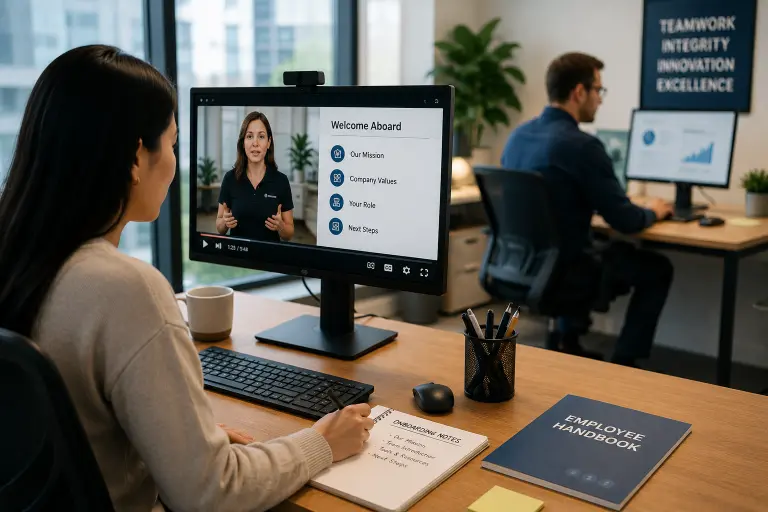
Onboarding and orientation shortens the time before a new hire is productive.
Training and compliance delivers consistent instruction that does not degrade with each retelling.
Safety content matters enormously in industries where a procedure gap has physical consequences.
Executive and change communication carries a tone, which text cannot. A written memo about a reorganization is read for information. A video of a leader explaining it is read for reassurance.
Culture and internal storytelling builds the connection that retention depends on, particularly across distributed teams.
Where Corporate Video Actually Pays for Itself
Marketing video is judged on revenue. Corporate video is frequently judged wrong, because its return often shows up as cost avoided rather than money earned.
Training delivered once instead of forty times. Every in person orientation session consumes a trainer's day. A video delivers the same content indefinitely, consistently, and at whatever hour a new hire starts.
Faster time to productivity. New employees who can rewatch a process video reach competence sooner, and they interrupt colleagues less while getting there.
Fewer repeated questions. A short video answering the question your support team fields sixty times a month deflects sixty conversations a month, permanently.
Compliance you can prove. Recorded training with tracked completion is documentation, which matters when a regulator or an insurer asks.
Recruitment and retention. Candidates research culture before applying, and employees who understand where the company is going leave less often. Turnover is among the largest unbudgeted costs most organizations carry, and video that reduces it slightly pays for itself many times over.
That is the argument to bring to a CFO. Not brand awareness. Hours recovered.
Why Most Corporate Video Goes Unwatched
Bad corporate videos are not bad because of the budget. It is bad because of a set of decisions made in the room before production, usually by committee.
It was made for the approver, not the viewer. When six executives review a script, every risky, interesting, or specific line gets sanded off. What survives is safe, general, and unwatchable.
It says everything. A video attempting to cover the whole company covers nothing. One video, one idea.
It has no reason to exist. If the same information would have been faster to read, the video is a worse email. Video earns its place when it shows something, demonstrates something, or carries tone.
Nobody is actually speaking. Executives reading scripts sound like executives reading scripts. Ask the question and let them answer it. A slightly imperfect real sentence beats a polished false one every time.
It is too long. Internal video especially. Three minutes is generous. Most training content works better as a series of short, findable segments than as one long file nobody scrubs through.
The Production Realities Corporate Video Demands
Corporate work carries constraints that consumer and advertising production do not.
Executives are not talented, and should not be treated as such. Do not hand a CEO a teleprompter script and hope. Interview them, ask real questions, and cut for their strongest moments. It takes longer and it is the only approach that produces something human.
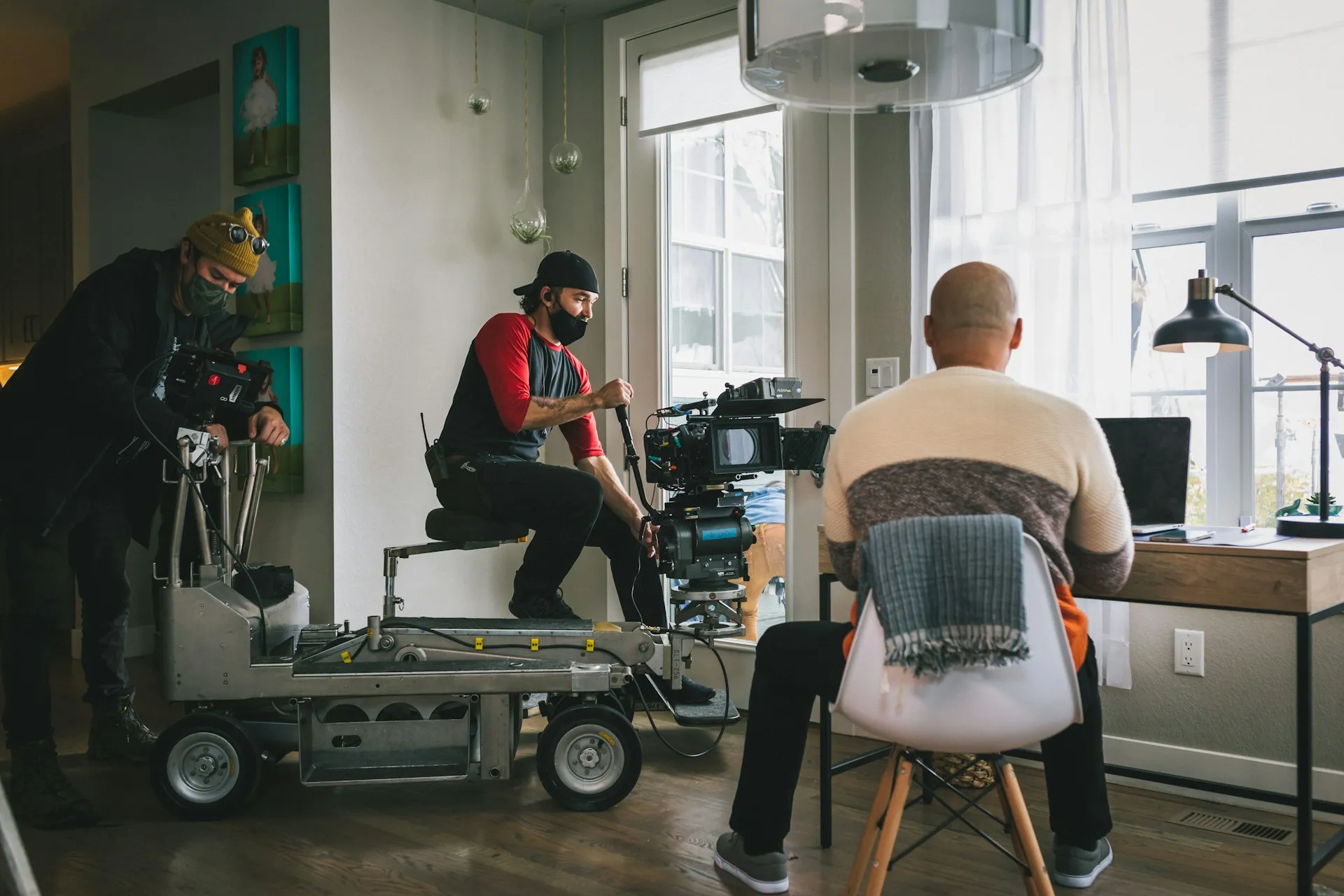
Filming inside a working business is a logistical problem. Production cannot stop the line, block the corridor, or interrupt patient care. Crews working in healthcare or manufacturing environments need to be unobtrusive, compliant, and fast, and they need to know what they are not allowed to film before they arrive.
Brand consistency compounds. A company with twelve videos made by six vendors looks like six companies. A single production partner protects visual identity across everything.
Shelf life should drive every decision. Corporate video is expensive to remake. Avoid dating it with visible technology, seasonal decor, specific figures, or employees likely to leave. Evergreen content is what makes the budget defensible.
Accessibility is not optional. Captions, transcripts, and clear audio are legally relevant for internal training and simply correct for everything else.
Building a Corporate Video Library Rather Than a Video
The organizations that get real value from corporate video stop commissioning individual videos and start building a library on a plan.
A single well planned production day can capture the brand film, three capability segments, two executive interviews, culture b-roll for the year, and the raw material for a dozen internal training modules. Batching is what takes corporate video from an occasional expense to a standing asset, and it is the single most effective cost control available.
Plan the library around the questions your organization answers repeatedly: what a new hire needs on day one, what a buyer asks in every sales call, what the support team explains constantly. Those questions are your production schedule.
Companies running conferences, town halls, and all hands meetings can feed the library from events they are already holding, particularly when event production and live streaming is planned to capture content rather than merely broadcast it. A single annual meeting, filmed properly, can supply executive communication, culture content, and customer facing material for months.
Corporate Video Production in Portland and the Pacific Northwest
Portland's economy runs on manufacturing, technology, healthcare, construction, athletic and outdoor brands, and a deep bench of professional services firms, all of which have substantial corporate video needs and comparatively few partners who handle both the external polish and the internal practicality.
Portland Production Services has produced corporate video for Pacific Northwest organizations for more than 20 years, with fully owned equipment and an in-house crew across Portland, Beaverton, Hillsboro, Lake Oswego, Tigard, and Vancouver, WA. For corporate work, that continuity matters more than for any other category: a partner who already knows your facility, your brand standards, your compliance constraints, and your executives works faster on the fifth project than on the first.
Owned gear matters here too. Corporate shoots are scheduled around executive calendars, plant shutdowns, and quarter ends, none of which move for rental availability.
Make Corporate Video Worth Someone's Time
Corporate video production grows a business in two directions at once. Outward, it proves capability to buyers who are deciding whether you are credible. Inward, it recovers hours, shortens ramp time, and answers the same questions forever.
Both only work if someone actually watches. Make one point, let real people speak, keep it short, and give the viewer a reason to press play. Everything else is a drone shot of a building.
Let's Build Corporate Video Nobody Skips
Portland Production Services has produced corporate video for Pacific Northwest organizations for over two decades, with owned gear, an in house crew, and a low tolerance for the kind of video that wastes everyone's time.
Book a consultation with Portland Production Services and bring the question your company answers a hundred times a year. We will build the video that answers it once.
Already worked with PPS? Share your experience in a quick review and help the next Portland company invest in video with confidence.
Frequently Asked Questions
1.What is corporate video production?
Corporate video production is the creation of video that serves an organization's operations and reputation rather than a specific advertising campaign. It spans external content like brand films, capability videos, and customer stories, and internal content like onboarding, training, safety, and executive communication. Its return often appears as cost avoided rather than revenue earned.
2.What is the difference between corporate video and commercial video?
Commercial video is built to sell a product or service to a market, while corporate video builds an organization's credibility with clients and supports the people who work there. A capability film shown to a procurement buyer is corporate video, and an ad running in paid media is commercial video. They frequently share a production day but serve different purposes.
3.How does corporate video save a company money?
Corporate video delivers training once instead of repeating it for every new hire, shortens time to productivity, deflects repeated support questions, documents compliance training, and supports recruitment and retention. Turnover and repeated training are among the largest unbudgeted costs most organizations carry. Video that reduces either pays for itself well beyond its production cost.
4.Why are most corporate videos boring?
Most corporate video is made for the executives approving it rather than the people watching it, tries to cover everything instead of one idea, and puts leaders in front of teleprompters instead of asking them real questions. It also tends to run far too long. Video earns attention when it shows something, demonstrates something, or carries a tone that text cannot.
Key Takeaways
- Corporate video serves two audiences, external buyers and partners who need proof of credibility, and internal employees who need training, clarity, and connection. Confusing the two produces videos that fail both.
- Its return is often operational rather than commercial. Training delivered once, faster onboarding, deflected support questions, provable compliance, and reduced turnover are the arguments that win budget approval.
- Most corporate video is unwatched because it was made by a committee for the approver. One idea, real people answering real questions, and ruthless brevity fix nearly all of it.
- Build a library, not a video. One planned production day can supply external, executive, and internal content for a year. PPS brings 20+ years of Pacific Northwest experience, owned gear, and an in-house crew.
There's more ...


Unleash Your Inner Creative Madness With Us!
info@portlandproductionservices.com
503-317-6447
© Portland Production Services 2026
8816 SE 29TH AVE
MILWAUKIE OR 97222-6323, US

