

Advertising Video Production: What Your Business Needs
Effective advertising video production succeeds by matching the right message to the right audience, platform, and business goal before production begins.
Most businesses do not have a video problem. They have a matching problem. They commission an ad without first deciding what the ad is supposed to do, which platform it lives on, or who it is talking to, and then wonder why a perfectly nice-looking video produced perfectly nothing. Effective advertising video production starts long before the camera, with a clear answer to one question: what does your business actually need this ad to accomplish. Get that right and advertising video production built around a defined business objective becomes the highest-leverage marketing spend you make. Get it wrong and you have an expensive video that wins compliments and loses money. This guide gives you the framework to get it right.
Start With the Job, Not the Camera
Every advertising video should have exactly one primary job. The most common and most expensive mistake in video advertising is asking a single ad to do everything at once.
An ad built to drive awareness looks, sounds, and performs differently than an ad built to close a sale. An advertising video that tries to do both usually does neither. The brands that win define the job first, then build the ad to fit, then measure against that one job and nothing else.
Awareness Ads
Awareness ads introduce your brand to people who do not yet know you exist. They prioritize a strong hook, memorable visuals, and an emotional impression over detailed information. Success is measured in reach, recall, and lift in branded search, not immediate clicks.
Consideration Ads
Consideration ads target people aware of a problem and evaluating solutions. These do the explaining: how your product works, what makes it different, why you over the alternatives. Product demos, explainers, and founder-led videos all live here, and they get measured on engagement and lead quality.
Conversion Ads
Conversion ads talk to people ready to buy who need one final push. They lead with a clear offer, a sharp call to action, and proof that removes the last hesitation. Testimonials, promotional and offer-driven videos, and direct-response spots fit this stage, and they get measured on conversions and cost per acquisition, full stop.
Matching the Ad to the Platform
The second matching decision is platform, because the same message needs a different build depending on where it runs.
Vertical Social Ads
Instagram Reels, TikTok, and YouTube Shorts demand vertical framing, a hook in the first second, and a message that survives muted autoplay through captions and visual storytelling. These ads are short, fast, and unforgiving. A horizontal commercial crammed into a vertical slot signals an out-of-touch brand instantly.
In-Stream and Pre-Roll
YouTube pre-roll and streaming in-stream ads get a few skippable seconds to earn the rest. The opening has to stop the skip reflex, and the core message needs to land before the skip button activates. These reward tight scripting and front-loaded value.
Connected TV and Broadcast
Big-screen advertising runs with sound on to a relaxed, attentive viewer, which rewards production polish, story, and emotional weight. This is also the most demanding technical spec, which means an ad built for connected TV can be cut down for every smaller platform afterward.
Landing Page and Website Video
Video embedded on your own pages works at the bottom of the funnel, where a visitor is already interested and needs confidence to act. These can run longer, carry more detail, and speak directly to a warm audience. Building one production to feed all four placements is where smart advertising video production saves real money, and it only happens when the platform plan exists before the shoot.
What Your Business Actually Needs to Produce a Video Ad
Clients often arrive thinking they need a creative concept first. What they actually need are three pieces of clarity, and a production partner who can build everything else from them.
A Defined Audience
Not "everyone who might buy." A specific person: their problem, their objections, what they already believe, and what would change their mind. The sharper the audience, the sharper every downstream decision.
A Single Measurable Goal
One metric the ad is responsible for moving. Brand recall, qualified leads, cost per acquisition, or landing page conversion. A goal makes the entire production accountable and tells everyone involved what a win looks like before a frame is shot.
A Realistic Budget Range
The budget is not just the production cost. It is production plus the media spend to actually run the ad. A common failure is spending the entire budget on a beautiful video and having nothing left to put it in front of anyone. A good production partner helps you split the two intelligently.
Everything Else Is the Production Partner's Job
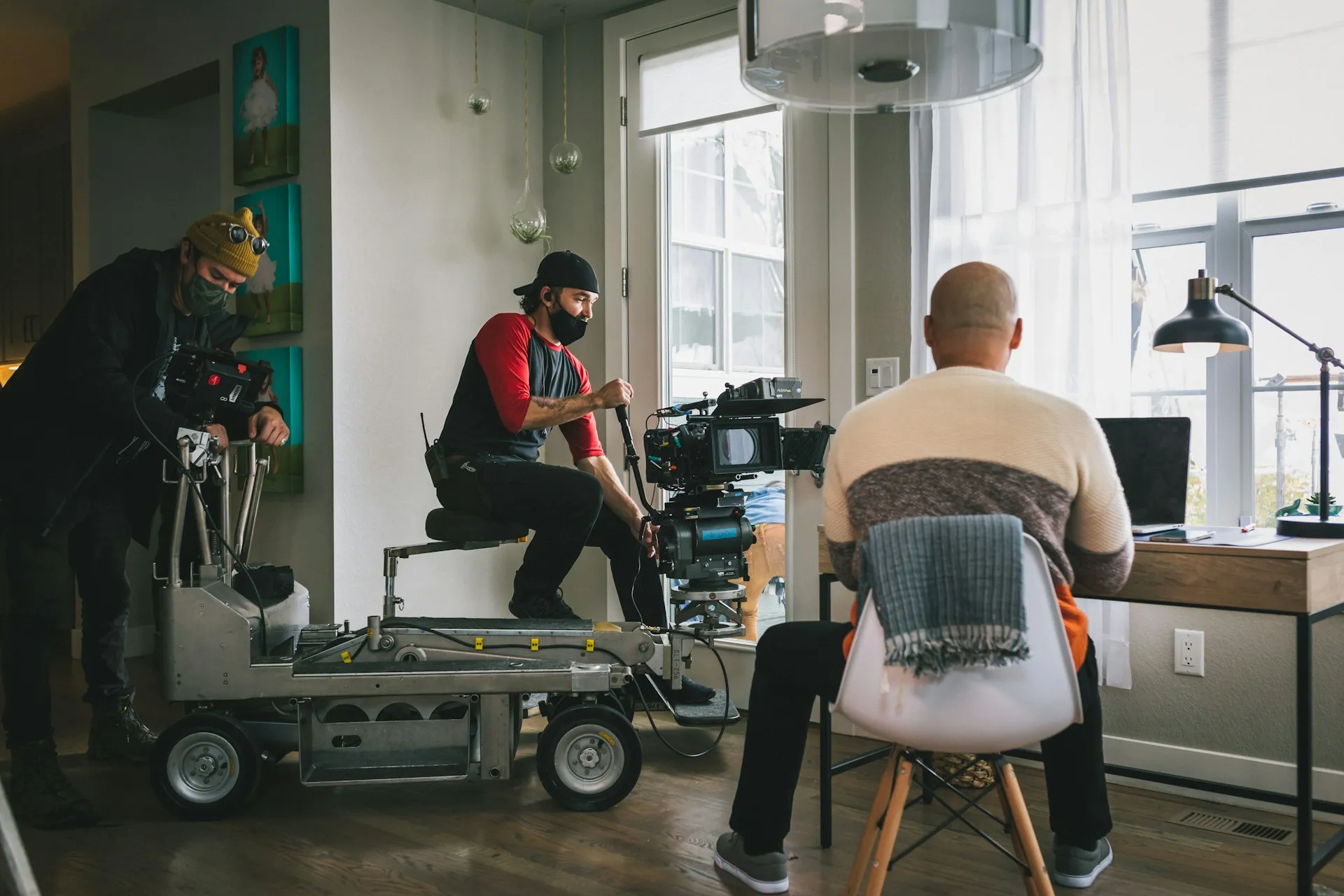
Concept, script, casting, locations, shot design, equipment, crew, editing, and platform-formatted delivery all belong to the production company. PPS handles this end to end, which is exactly why clients only need to bring the audience, the goal, and the budget. The Westland Investors project is a clear example of a defined objective, to build investor confidence, turned into an advertising video that did its one job well.
The Production Choices That Decide Whether an Ad Works
Beyond strategy, a handful of craft decisions separate video ads that convert from video ads that merely play.
The first three seconds are the whole game. In every paid environment, the opening decides whether the ad gets watched or skipped. Professional advertising video production engineers the hook deliberately rather than hoping the audience sticks around for the good part.
Sound carries half the persuasion. Clean dialogue, intentional music, and proper mixing do persuasive work the viewer never consciously notices. Bad audio is the fastest way to make a brand feel cheap, even when the visuals are strong.
Captions are not optional. A large share of social video plays muted. An ad that depends on audio to make its point loses most of its audience before the point arrives. Caption strategy belongs in the edit, not as an afterthought.
Pacing matches the platform. A reflective brand film and a snappy conversion ad need completely different rhythms. Matching pace to platform and intent is a craft skill that separates production professionals from order-takers.
Industry Context Changes Everything
The right advertising video for a manufacturer is not the right advertising video for a healthcare provider, and a production partner who treats every industry the same produces ads that feel generic to all of them.
A manufacturing brand advertising to procurement buyers needs to demonstrate capability, precision, and reliability, often on the factory floor itself. A healthcare provider advertising to patients needs warmth, trust, and clarity, with careful attention to tone and compliance. The same camera and crew serve both, but the strategic build is entirely different.
This is where industry experience earns its keep. A production company that has actually worked across verticals knows the unspoken rules each one carries, and builds advertising video that feels native to the audience it targets rather than translated from somewhere else.
For brands whose advertising connects to live moments, like product launches, conferences, or sponsored events, pairing video ads with full-scale event production turns a single occasion into both a live experience and a library of advertising footage.
Why Portland Brands Choose a Local Production Partner
Advertising video production runs smoother, faster, and cheaper when the team is local, and the results read more authentically when the crew knows the market.
Portland Production Services has produced advertising video across Portland, Beaverton, Hillsboro, Lake Oswego, Tigard, and Vancouver, WA for more than 20 years, with fully owned equipment and an in-house crew. For ad work that often runs on tight campaign timelines, local production means no travel days on the invoice, locations the team already knows, and the flexibility to turn a shoot around quickly when a campaign launch date will not move.
It also means advertising that looks like the Pacific Northwest rather than anywhere. For regional brands, that authenticity is part of the persuasion, because local audiences recognize their own market on screen and trust brands that clearly belong to it.
The Right Ad, Built Right, for the Right Job
Advertising video production is not about making something that looks good. It is about making the right something, for a defined audience, with one clear job, formatted for the platform where it runs. Get the matching right and video becomes the most efficient advertising you can buy. Skip the matching and even a beautiful ad burns money.
What your business needs is not just a video. It is a production partner who insists on the strategy before the shoot.
Let's Build an Ad That Actually Has a Job
Portland Production Services brings 20+ years of advertising video experience, fully owned gear, and an in-house Pacific Northwest crew to brands that need ads that perform, not just play.
Book a consultation with Portland Production Services and bring your audience, your goal, and your budget. We will bring the strategy and the production to match.
Already run a campaign with PPS? Share your experience in a quick review and help the next Portland business advertise with confidence.
Frequently Asked Questions
1. What is advertising video production?
Advertising video production is the process of creating a video specifically built to run as a paid advertisement, engineered around a defined audience, a single business goal, and the platform where it will run. It covers strategy, scripting, filming, editing, and platform-specific delivery formats. Unlike general brand video, every creative choice is made to drive a measurable advertising outcome.
2. How many video ads do I need for a campaign?
Most effective campaigns use one core production cut into multiple versions rather than many separate shoots. A single well-planned advertising video production typically yields a hero ad plus vertical, square, and short-form cuts for different placements and audience stages. Running several variations of the same core message also lets you test which hook and format perform best.
3. Should my video ad be different for each platform?
Yes. The same message needs different framing, length, pacing, and captioning depending on whether it runs on vertical social, YouTube pre-roll, connected TV, or your website. The most cost-effective approach is producing one shoot to broadcast standard, then cutting platform-specific versions from that single source. This delivers native-feeling ads everywhere without separate productions.
4. How do I know if my advertising video is working?
Measure it against the single goal it was built for, not against general view counts. An awareness ad is judged on reach and recall, a conversion ad on cost per acquisition, and a consideration ad on engagement and lead quality. Benchmark your numbers before launch so the before-and-after comparison gives you clean evidence of impact.
Key Takeaways
- Effective advertising video production starts with matching, not filming: define the single job, the target audience, and the platform before any creative work begins.
- One production should feed every placement. A shoot planned to broadcast standard supplies vertical social, pre-roll, connected TV, and website cuts from the same source, which is where the budget efficiency lives.
- Craft decisions decide outcomes: the first three seconds, clean audio, captions, and platform-matched pacing separate ads that convert from ads that simply play.
- PPS pairs 20+ years of advertising video experience with owned gear and a local Pacific Northwest crew, so Portland brands get strategy-first ads built fast enough to hit campaign launch dates.
There's more ...


.webp)
Unleash Your Inner Creative Madness With Us!
info@portlandproductionservices.com
503-317-6447
© Portland Production Services 2026
8816 SE 29TH AVE
MILWAUKIE OR 97222-6323, US

