


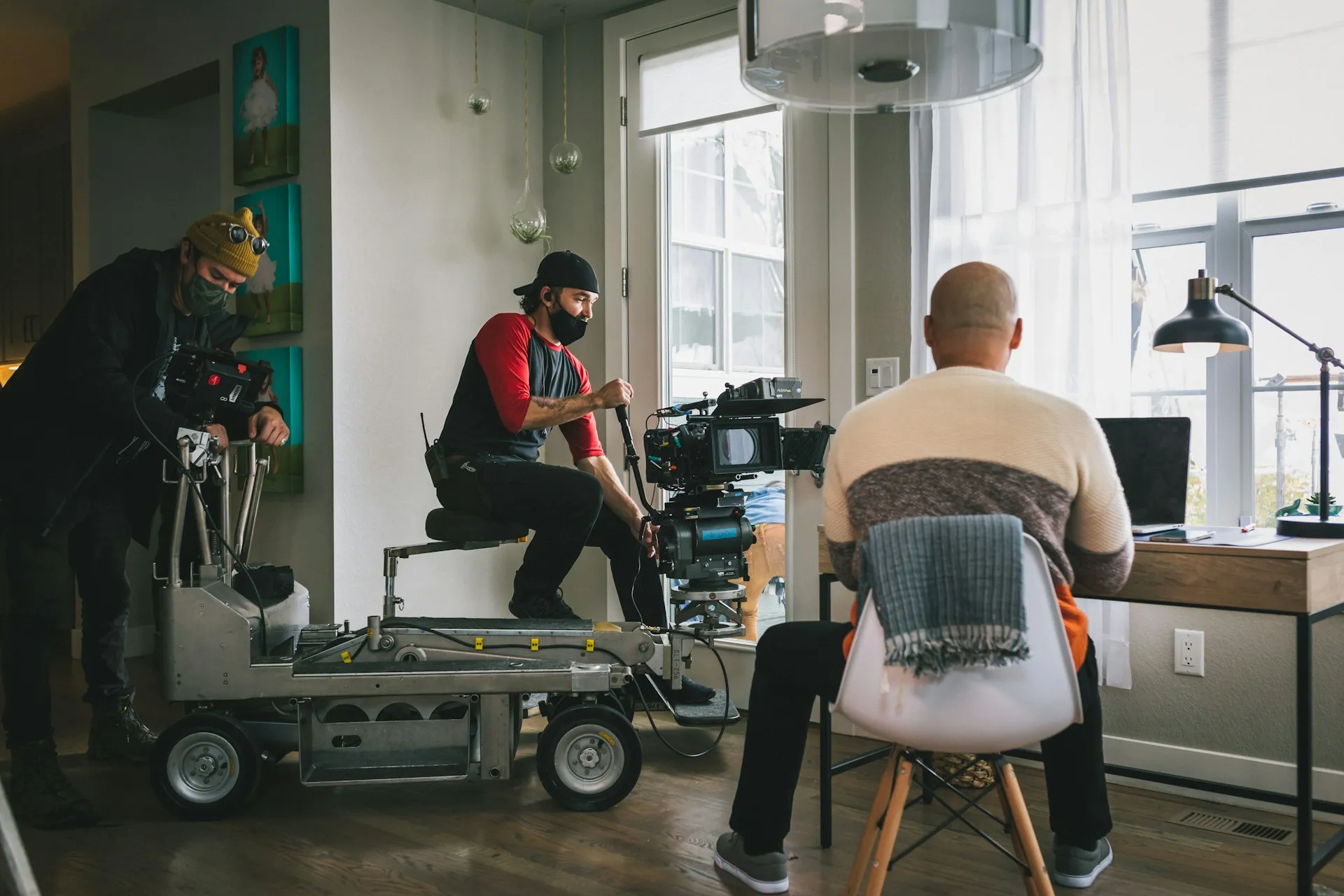



How to Create Marketing Videos: A Step-by-Step Guide
Creating marketing videos consistently is easier when you follow a repeatable workflow—plan, script, batch film, edit with templates, and publish on a schedule—turning video production into a scalable system rather than a series of one-off projects.
The hardest part of creating marketing videos is not making one. It is making them consistently, without every video turning into a fresh ordeal that eats a week of your time. The businesses that publish videos regularly are not more talented. They have a repeatable system.
This guide gives you that system: a clear, step-by-step workflow for creating marketing videos that you can run again and again. It works whether you are producing in-house or preparing to scale with marketing video production built for consistency and quality. The goal is not one good video. It is a process that reliably produces good videos. Let us build it.
Build a Process, Not One-Off Videos
The single biggest shift in creating marketing videos is moving from treating each video as a separate project to running them through a repeatable workflow.
When every video starts from scratch, the effort never gets easier and the output stays inconsistent. A repeatable process turns video creation from an exhausting one-off into a routine you get faster and better at every cycle. It also keeps your videos visually consistent, which builds brand recognition over time. The steps below are that process. Set them up once, and creating your next marketing video becomes a matter of running the system rather than reinventing it.
Step 1: Set the Goal and Map a Simple Plan
Every video starts with a goal, but a workflow needs that goal captured in a simple, repeatable plan. Before filming, write down three things: what this video is for, who it is for, and what you want the viewer to do.
Keep this lightweight. A short planning template you fill in for every video, covering goal, audience, key message, and call to action, is enough. The point is consistency: the same quick planning step before every video means nothing important gets skipped and every video has a clear job. This planning habit is what separates a steady stream of useful videos from a pile of footage with no purpose.
Step 2: Write a Tight Script or Outline
Once the plan is set, turn it into a script or a structured outline. Even a simple talking-head video benefits from knowing what you will say before the camera rolls.
For most marketing videos, a reliable structure is: open with a hook, state the problem your audience feels, present your point or solution, and close with the action you defined in Step 1. Write the way you speak so it sounds natural. A loose outline works for casual content, while higher-stakes videos deserve a fuller script. Either way, scripting before filming saves enormous time in editing, because you capture what you need instead of rambling and fixing it later.
Step 3: Set Up a Repeatable Recording Space
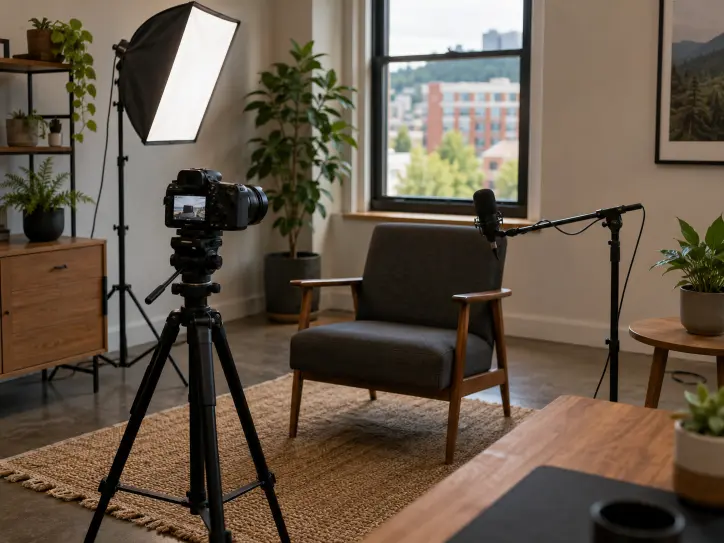
A workflow needs a consistent setup you can return to without rebuilding it each time. Find a spot with good light, manage the sound, and frame your shot the same way each cycle.
You do not need a studio. A spot near a window for natural light, a simple microphone to keep audio clean, and a phone or camera on a steady tripod will produce solid results. The key for a repeatable workflow is documenting your setup, where the camera sits, where the light comes from, what settings you use, so you can recreate it instantly for the next video. Consistency in setup means consistency in output, which is what makes a series of videos feel like they belong to one brand.
Step 4: Batch Your Filming
Here is the step that changes everything about creating marketing videos efficiently: stop filming one video at a time. Film several in one sitting.
Once your space is set up and you are in front of the camera, the marginal cost of recording another video is tiny. Plan a batch of videos, prepare their scripts together, and film them all in one session. A single afternoon can produce a month of content. Batching is the difference between video feeling like a constant burden and feeling like an occasional, productive block of work. This is also exactly how professional shoots maximize value, capturing material for many videos, including formats like corporate and training videos, from one efficient production window. A small business running quarterly batch sessions can sustain a video presence that looks far bigger than its team.
Step 5: Edit With a Consistent Template
Editing is where a workflow saves the most time, if you stop starting from zero. Build a simple editing template, your intro, your fonts, your colors, your caption style, your outro, and reuse it for every video.
A template keeps your videos visually consistent and dramatically speeds up editing, because the repeated elements are already built. Focus your editing energy on tightening the content: cut the pauses, keep the pacing up, and add captions since many viewers watch muted. The first time you build the template takes effort. Every video after that drops into it, which is the whole point of a repeatable system.
Step 6: Publish, Organize, and Repurpose
A finished video that sits in a folder does nothing. Build the final steps of publishing and repurposing into your workflow.
Format each video for where it will live, a vertical cut for Reels and Shorts, a horizontal version for YouTube, a sized version for your site. Then repurpose: one longer video becomes several short clips, a single interview yields multiple soundbites. Keep your files organized with a consistent naming and folder system so you can find and reuse footage later. The brands that get the most from video are not the ones filming the most. They are the ones extracting the most from everything they film.
Step 7: Run It on a Calendar
The final piece that turns a workflow into a habit is a simple content calendar. Decide how often you will publish, schedule your batch filming sessions ahead of time, and plan which videos support upcoming launches, seasons, or events.
A calendar removes the recurring decision of what to make and when, which is the friction that kills most video efforts. For businesses with live moments worth capturing, the calendar can also fold in larger productions, like event production and live streaming, around which smaller content gets created. The calendar is what keeps the whole system running instead of stalling after the initial burst of enthusiasm.
When to Scale Up With a Professional
This workflow will carry you a long way, and for steady marketing content it is exactly what you need. But some videos justify more than a repeatable in-house process can deliver: a brand-defining piece, a high-stakes campaign, or work for an industry where production quality is part of the sale, like construction firms proving capability to developers.
For those, a professional team applies this same systematic thinking at a higher level, with better gear, deeper skill, and a process refined over decades. The Westland Investors project shows what that professional standard produces when a video carries real weight. PPS has helped Pacific Northwest businesses create marketing videos for over 20 years, with owned gear and an in-house crew across Portland, Beaverton, Hillsboro, Lake Oswego, Tigard, and Vancouver, WA. The smartest approach for most brands is a blend: run the workflow in-house for volume, and bring in professionals for the videos that matter most.
A System Beats Talent Every Time
Creating marketing videos consistently is not about being a natural on camera or owning expensive gear. It is about building a repeatable workflow, plan, script, set up, batch film, edit on a template, publish and repurpose, and run on a calendar, then running it again and again.
Set the system up once and the hardest part is behind you. Everything after that is just turning the crank, and the videos keep coming.
Ready to Take Your Video Up a Level?
Portland Production Services brings 20+ years of marketing video experience, fully owned gear, and a local Pacific Northwest crew to brands ready to scale beyond what an in-house workflow can deliver.
Book a consultation with Portland Production Services and tell us where your video needs to go next. We will help you build the high-stakes pieces that anchor your whole content system.
Already create videos with PPS? Leave a quick review about your experience and help the next Portland business build a system that works.
Frequently Asked Questions
1.How do you create marketing videos step by step?
Creating marketing videos follows a repeatable workflow: set the goal and plan, write a script or outline, set up a consistent recording space, batch film multiple videos at once, edit using a reusable template, then publish and repurpose the footage. Running this same process each cycle makes video creation faster and more consistent over time. The system matters more than any single video.
2.What is the easiest way to make marketing videos consistently?
The easiest way is to build a repeatable system rather than treating each video as a one-off project. Set up a consistent recording space, batch film several videos in one session, and edit them with a reusable template. Batching and templating are the two habits that remove most of the time and effort, turning video from a recurring burden into a routine.
3.What do I need to start creating marketing videos?
You need a clear goal, a simple script, a camera or smartphone, a microphone for clean audio, and decent lighting such as a window. A basic editing tool and a reusable template complete the setup. Beyond the equipment, the most valuable thing is a repeatable workflow so you can create videos consistently instead of struggling through each one.
4.Should I batch film my marketing videos?
Yes. Batch filming, recording several videos in one session, is the single most efficient habit in creating marketing videos. Once your space and setup are ready, filming additional videos costs very little extra time, so one session can produce weeks of content. Batching is how small teams sustain a steady video presence without it taking over their schedule.
Key Takeaways
- Consistency comes from a repeatable system, not talent or gear. Build the workflow once, then run it each cycle to create marketing videos faster and more consistently.
- The core workflow is seven steps: plan, script, set up a recording space, batch film, edit on a template, publish and repurpose, and run it on a calendar.
- Batching and templating save the most time, turning video creation from a constant burden into an occasional, productive block of work.
- Run the system in-house for volume and bring in a pro for high-stakes videos. PPS applies this systematic thinking at a professional level with 20+ years of Pacific Northwest experience, owned gear, and a local crew.
There's more ...



Unleash Your Inner Creative Madness With Us!
info@portlandproductionservices.com
503-317-6447
© Portland Production Services 2026
8816 SE 29TH AVE
MILWAUKIE OR 97222-6323, US

